Hen of the Woods / Maitake (Grifola frondosa): Oak-Base ID & Cooking Dried
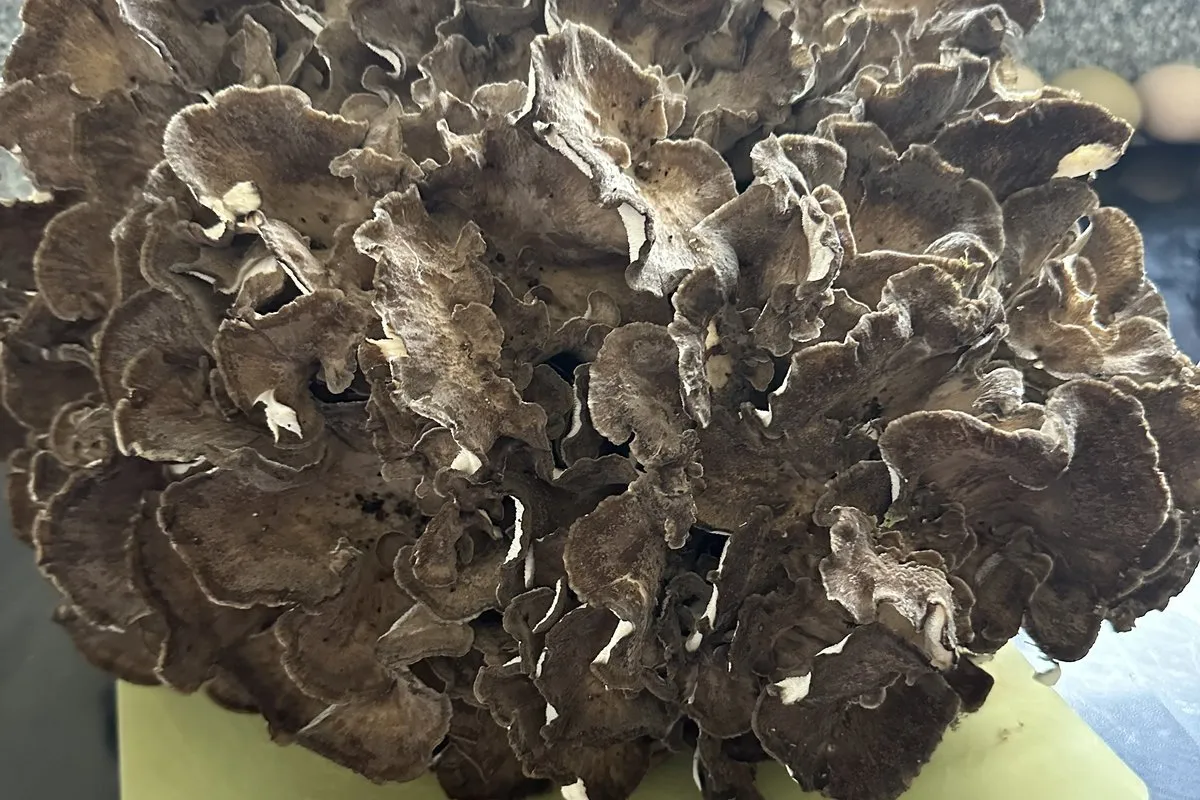
Hen of the woods—also called maitake—Grifola frondosa is a favorite fall polypore for Michigan foragers who know where mature oaks stand. Here, the classic picture is a ruffled, overlapping cluster of gray-brown fronds rising from the soil at the base of an oak, connected to a shared, branching base.
Before you cook any, check for pores under the fronds and a single branching base. If you’re not sure, leave it.
What Is Hen of the Woods (Maitake)?
Grifola frondosa is a polypore: the undersides of the fronds have pores rather than true gills. The fruiting body often looks like a fluffed hen at the base of a tree—hence “hen of the woods.” “Maitake” is the widely used culinary name you will see on menus and in dried-mushroom jars.
Unlike single-cap mushrooms on a central stem, hen of the woods forms a rosette or clustered bouquet of many leafy fronds from one tough base. That architecture is a core ID feature—but it is still only one feature among several.
Habitat: Why Oak Bases Matter
In our region, foragers strongly associate Grifola frondosa with oaks (Quercus species) and the soil at the tree’s base—often appearing to grow from the ground while connected to roots or the lower trunk area. You may also hear about other hardwood associations, but oak bases are the best place to start looking.
When you scout oak country:
Check mature oak stands and yard oaks (with permission on private land).
Look at the base, not high on the trunk like many shelf polypores.
Return to known trees across seasons; some sites fruit repeatedly over years.
Note the date, weather, and tree species in your field notes.
Never dig aggressively into the base. Take fronds you will use and leave the site as intact as practical so the organism can continue.
Identification Features (Scannable Checklist)
Overall form
Clustered, overlapping fronds (leaf-like lobes)
Gray, brown, or olive-brown upper surfaces are common; color varies with age and weather
One shared base; fronds branch outward
Underside
White to cream pores (polypore)
No true gills
Texture
Young fronds are more tender
Older specimens become tougher and may harbor more debris or insects—inspect carefully
Location
Typically at the base of oaks / associated hardwoods
Appearing terrestrial at the base while tied to woody roots or stump areas
Positive ID means you can explain why it is Grifola frondosa (or your confirmed local determination) and why it is not a lookalike of concern—before it goes in a basket for the table.
Lookalikes and Caution
Beginners sometimes confuse large clustered polypores or other “rosette” fungi at tree bases. Watch for these:
Black-staining polypore (Meripilus sumstinei) can form overlapping clusters at tree bases and may bruise/blacken; learn the differences in pore surface, bruising, and frond character with a mentor and reliable keys.
Other polypores and layered shelf fungi grow on wood; compare growth site (true shelves on trunks vs. basal rosettes), pore traits, and frond shape.
Do not use “it was under an oak” as your only evidence. Oaks host many fungi.
If you cannot confirm the fungus with confidence, leave it. Bring clear photos of top, underside, base, and habitat to a qualified identifier—or learn in person. Social media guesses are not ID.
Harvest Notes for Responsible Foragers
Confirm land access (public rules or private permission).
Harvest cleanly; brush off leaf litter in the field when possible.
Take only what you will dry or cook soon.
Leave immature buttons if your ethic is to let them develop—and always leave enough of the site undisturbed.
Pair this with our foraging ethics guide.
Drying Maitake / Hen of the Woods
Dried Grifola frondosa keeps the deep, woodsy flavor cooks love in winter stews. High-level process:
Start with positively identified, clean young-to-prime fronds.
Tear or cut into even pieces for consistent drying.
Dry until fully crisp throughout.
Store airtight with a label: name (Grifola frondosa / hen of the woods / maitake), date, and your notes.
Avoid drying questionable material “just in case.” Drying does not fix a bad identification.
Cooking Dried Hen of the Woods
Rehydrate first (see our rehydration guide for chicken of the woods and maitake). Then cook thoroughly.
Simple approach
Soak in warm water or stock until flexible.
Strain and save clean soaking liquid for soup.
Squeeze gently, chop, and brown in a pan to develop flavor.
Finish in risotto, gravy, bean stew, roasted vegetable pans, or noodle broths.
Kitchen tips
Maitake likes browning—give it time in the pan.
Balance earthiness with acid (vinegar, wine, lemon) and aromatics.
Tough base pieces can flavor stock even when not ideal for biting texture.
Taste maitake before you find one
Our dried wild hen of the woods (Grifola frondosa) is picked at the base of oaks in Clare County. It comes in 1 oz ($15.99), 2 oz ($28.99) and 4 oz ($54.99) bags, and the 4 oz bag ships free in Michigan.
We ship within Michigan, and mushroom orders of $50 or more ship free in Michigan. Pickup in Clare County is always free.
Continue Learning
Hen of the woods / maitake (Grifola frondosa) is a fall highlight when oaks and weather align. Identify with care, dry with patience, and cook with curiosity. Our dried maitake ships within Michigan. More guides are on Learn.
Key takeaway: Basal oak clusters, pore-bearing fronds, and lookalike awareness—plus positive ID—come before any recipe.
Make a pot of maitake soup
Soak 1 ounce of dried maitake in warm water for 20 to 30 minutes, then brown it in butter and simmer it in stock along with the strained soaking water.
