
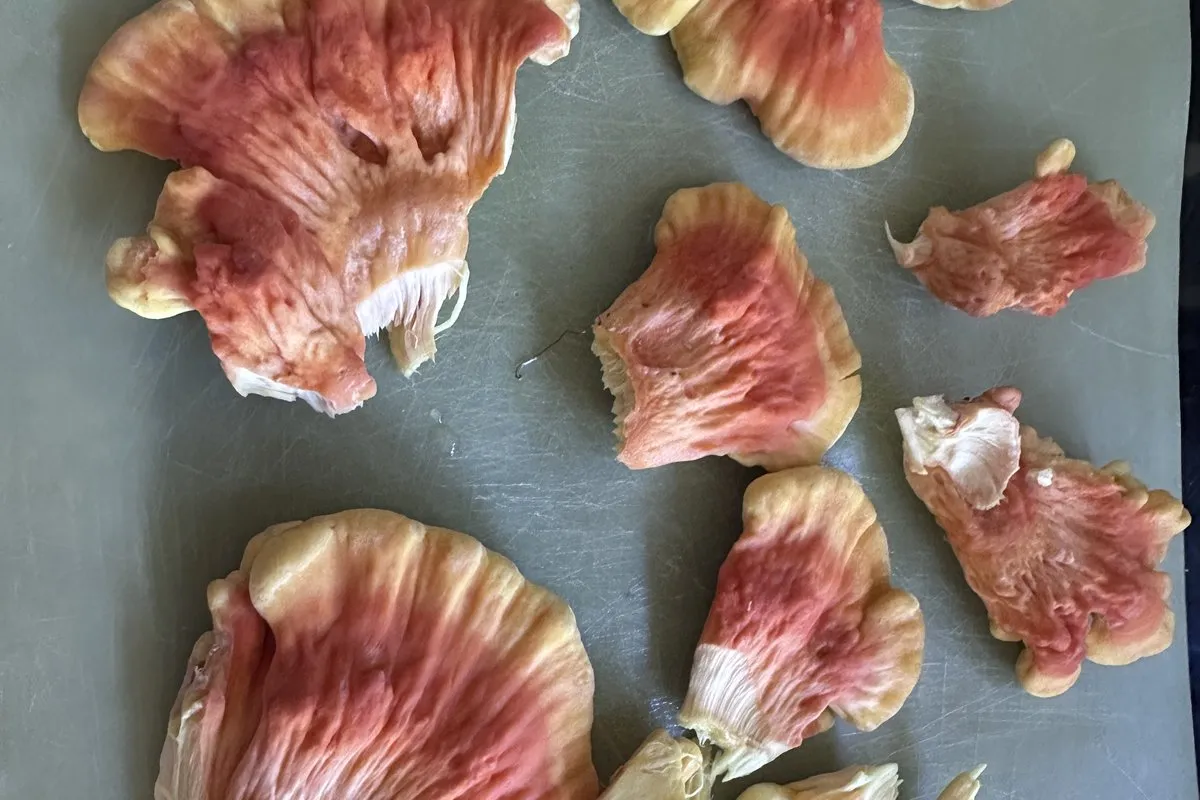
How to Rehydrate Dried Wild Mushrooms (COTW & Maitake)
Dried wild mushrooms are a practical way to bring Michigan forest flavor into winter soups and weeknight skillets. At Fungi, Flora & Ferment, we talk often about two customer favorites: dried chicken of the woods (Laetiporus) and dried hen of the woods / maitake (Grifola frondosa). Rehydrating them well is the difference between chewy disappointment and a pan that smells like fall woods.
Soaking doesn’t change what a mushroom is. Only cook dried mushrooms you know were identified before they were dried.
Why Rehydrate Instead of Tossing Dry Pieces Straight in a Pot?
You can add small dried pieces directly to long-simmering soups. For sautéing, stuffing, or recipes where texture matters, a dedicated soak gives:
More even tenderness
Better browning after you pat pieces dry
A bonus mushroom soaking liquid for gravy and broth (when the liquid smells clean)
Chicken of the woods (Laetiporus) and maitake (Grifola frondosa) both respond well to a warm soak, then a thorough cook.
What You Need
Dried, positively identified wild mushrooms
A clean bowl
Warm water, unsalted stock, or a light vegetable broth
Fine strainer or coffee filter (optional, for grit)
Clean kitchen towel or paper towels
Time: often 20–40 minutes, sometimes longer for thicker pieces
Avoid heavily salted soaking liquids if you want control over seasoning later.
Step-by-Step Method
1. Inspect and portion
Remove any pieces that smell off, show moisture damage, or were not clearly labeled. Tear or cut large dried fronds/shelves into recipe-ready sizes so they rehydrate evenly.
2. Cover with warm liquid
Place mushrooms in a bowl and cover with warm (not boiling-hard) water or stock. Use enough liquid to keep pieces submerged; weigh them down with a small plate if they float.
3. Soak until pliable
Maitake (Grifola frondosa): often softens into flexible fronds in roughly 20–30 minutes.
Chicken of the woods (Laetiporus): similar window for thin slices; thicker shelf pieces may need longer.
Gently squeeze a piece: it should bend without sharp dry cores. If the center is still hard, keep soaking.
4. Strain and save the liquid (usually)
Lift mushrooms out. Pour soaking liquid through a fine strainer to catch forest grit. If it smells pleasant and clean, refrigerate and use within a day or two as soup base. If it smells sour, muddy in a bad way, or you distrust the source material, discard the liquid and rinse the mushrooms.
5. Squeeze and pat dry for sautéing
For skillet work, gently squeeze excess water and pat dry. Surface moisture steams instead of browns.
6. Cook thoroughly
Rehydration is not cooking. Always cook wild mushrooms thoroughly in your recipe. Brown maitake for deeper flavor; simmer chicken of the woods in sauces and stews until the texture suits you.
Warm Water vs. Stock vs. Cold Overnight Soaks
Liquid / method | Best for | Notes |
|---|---|---|
Warm water | Everyday cooking | Clean flavor; easy seasoning control |
Light stock | Soups, gravies | Builds savoriness early |
Cool overnight soak | Very thick pieces | Convenient; refrigerate during long soaks |
Boiling-hot liquid can sometimes make textures a bit tougher or uneven for delicate fronds; warm is a reliable default.
Species-Specific Kitchen Notes
Chicken of the woods (Laetiporus)
Prefer pieces dried from young, tender shelves; old woody shelves stay stubborn.
After soaking, slice into strips for “chicken-style” sautés or dice for pot pie filling.
Pair with onions, thyme, pepper, and a finish of acid.
Hen of the woods / maitake (Grifola frondosa)
Fronds rehydrate into ruffled pieces that crisp at the edges when roasted or pan-seared.
Excellent in risotto, noodle bowls, and butter-browned sides.
Tougher core bits can stay in the stockpot even if you reserve tender fronds for the plate.
Food Safety and Quality Habits
Start with mushrooms dried cleanly and stored airtight, cool, and dry.
Label jars with species names (common + scientific), date, and source notes.
When buying dried wild mushrooms, purchase from sellers who take identification seriously.
Do not assume drying “makes anything edible.” Only identified culinary species belong in the jar.
Watch for off smells, mold, or dampness in storage—when in doubt, do not cook them.
Recipe Starters (Culinary Ideas Only)
Weeknight gravy: Rehydrate maitake, brown with shallot, add strained soak liquid + stock, thicken lightly.
Skillet strips: Rehydrate chicken of the woods, pat dry, sauté hot with garlic and paprika, finish with vinegar.
Forest pot pie: Both species diced into a creamy vegetable filling under a biscuit top.
Season boldly; dried wild mushrooms can handle salt, fat, herbs, and acidity.
Common Rehydration Mistakes
Under-soaking → crunchy dry cores
Skipping the grit strain → sandy gravy
Crowding a wet pan → steaming instead of browning
Treating soak liquid as optional trash → lost flavor (when liquid is clean)
Forgetting final cook time → odd textures
From Our Kitchen Bench
Whether you dried your own positively identified harvest or you are cooking through a jar from Fungi, Flora & Ferment, rehydration is simple: warm liquid, patience, strain, dry the surface, then cook with care. Our dried chicken of the woods and maitake ship within Michigan, with free pickup in Clare County.
Key takeaway: Soften until pliable, save clean soaking liquid, pat dry for the pan, and cook thoroughly—every time.
Pick your first bag
Wild oyster is the mildest choice, starting at $12.99, and wild hen of the woods (maitake) has the most flavor, starting at $15.99. Wild chicken of the woods is the meatiest, starting at $15.99, and bed-grown wine cap is the firmest, starting at $13.99.
Any four 1 oz bags of mushrooms add up to more than $50, so together they ship free in Michigan, and pickup in Clare County is always free.
