Foraging Ethics in Michigan
Good foraging is less about filling a giant basket and more about belonging carefully to a place. Clare County woods, northern Lower Peninsula edges, and backyard oak–maple–pine stands are shared with wildlife, landowners, other foragers, and the fungi and plants themselves. At Fungi, Flora & Ferment, ethics sit beside identification—because a correctly named mushroom taken the wrong way still tells the wrong story.
Here's how to pick so you're welcome back: take only what you'll use, leave the mycelium and plant roots in place, and ask before you pick on private land.
Why Ethics Belong in Every Field Walk
Identification answers “what is it?” Ethics answers “should I take it, how much, and from whose land?” Both questions matter before dinner.
Unethical shortcuts—trespassing, stripping a patch, trampling nest sites, or harvesting from sprayed roadsides—damage trust and ecosystems. Ethical foraging keeps local knowledge welcome in local communities.
Take Only What You Will Use
A simple rule with teeth:
Harvest for meals you will actually cook, dry, or share soon.
Leave abundance behind—especially on small patches.
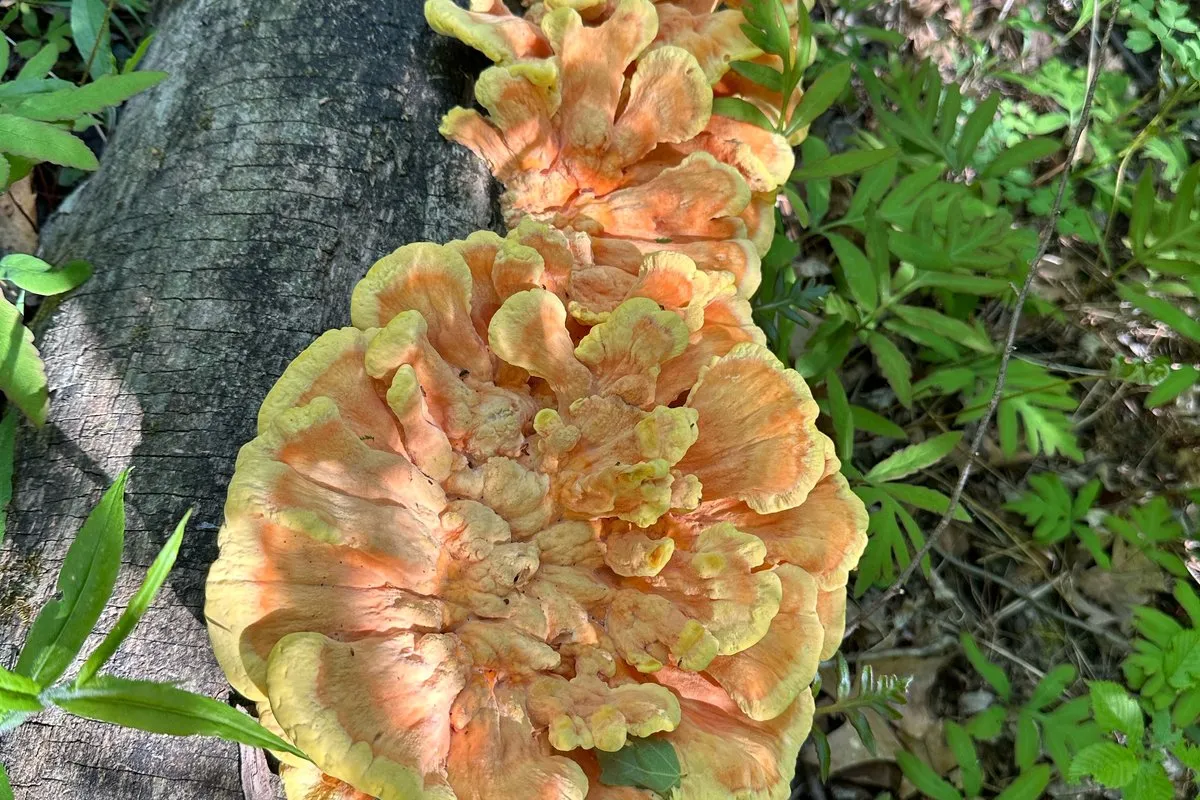
Resist “trophy filling” when you already have enough chicken of the woods (Laetiporus), hen of the woods / maitake (Grifola frondosa), morels (Morchella), chanterelles (Cantharellus), oysters (Pleurotus), black trumpets (Craterellus), or puffballs (Calvatia / Lycoperdon) for the week.
On plant walks, take modest needle or herb amounts for craft; do not strip a young Eastern white pine (Pinus strobus).
If food will spoil in your fridge, you took too much. Drying is a tool for preservation—not an excuse to empty a site.
Leave Mycelium; Harvest the Fruiting Body Thoughtfully
For mushrooms, what you usually pick is the fruiting body—the temporary reproductive structure. The mycelium—the living network in wood or soil—is what continues the organism’s life at that site.
Ethical habits:
Cut or pinch fruiting bodies cleanly when that suits the species and your training; avoid needless raking or digging that shreds the mycelial mat.
Do not “excavate the root” of a hen of the woods (Grifola frondosa) rosette as if it were a carrot. Take fronds you will use; leave the site structurally sound.
Fill in divots and leave the leaf litter looking natural.
Leave some fruiting bodies to mature and release spores.
Exact cutting-vs-pulling debates vary by species and mentor. The shared ethic is clear: do not destroy the living network for a photo or a few extra grams.
Private Land: Permission First
Much of the landscape in Clare County is private. Ethical foraging means:
Ask the landowner before you walk in with a knife and basket.
Treat “I did not see a sign” as insufficient.
Respect gardens, hunting seasons, livestock, and privacy.
Say thank you—and share a cooked dish or dried jar when it fits the relationship, without pressure.
Public land has its own rules. Learn whether foraging is allowed, limited, or prohibited where you walk. Regulations change; check current guidance rather than relying on a friend’s memory from years ago.
Contaminated and Sensitive Sites
Skip sites that are likely contaminated or stressed:
Busy road shoulders with runoff
Industrial edges and dump-adjacent soils
Lawns or fields with recent pesticide/herbicide programs
Conservation zones where collection is restricted
A beautiful flush of fungi does not clean polluted ground. Positive ID does not remove chemical risk.
Share Knowledge Without Creating a Stampede
Sharing is great, but posting GPS for every oak that fruits maitake (Grifola frondosa) can bring a crowd that wrecks a small site. Instead:
Share how and where to look in general, not exact pins
Bringing learners to abundant, permissioned sites
Protecting rare species and small patches
Never inventing or publishing GPS for private spots
Community matters more than clout.
Positive ID Before Any Culinary Use
Ethics includes not feeding people mystery mushrooms. Around here:
Confirm species with multiple features.
Use the puffball cut-open rule for Calvatia / Lycoperdon candidates.
Learn lookalikes for chicken of the woods (Laetiporus), morels (Morchella), chanterelles (Cantharellus), and other popular edibles.
Turkey tail (Trametes versicolor) is for ID practice, not the skillet.
When unsure, leave it.
If You Sell or Serve Wild Mushrooms
Selling or serving wild mushrooms in Michigan is serious. A few basics:
Certification and training matter for commercial contexts.
Traceability, clean handling, and species certainty matter.
Hobby shares should still be honest about uncertainty.
Plants and Flora Craft Belong in the Same Ethic
Whether you are snipping Eastern white pine (Pinus strobus) needles for a cottage-style tincture project or gathering culinary herbs:
Identify first.
Take lightly.
Avoid protected or scarce plants.
Flora ethics and fungi ethics are one land ethic.
A Field Checklist You Can Screenshot
Do I have permission or legal access?
Can I positively identify this organism (common + scientific name)?
Is the site reasonably clean of spray and pollution risk?
Will I actually use what I take?
Am I leaving mycelium / regenerative plant parts and plenty behind?
Will my photos or posts protect the spot?
If any answer is “no,” walk on.
Closing: Belong to the Woods Carefully
Foraging ethics are ordinary virtues practiced outdoors: ask, identify, take little, leave life in the ground, and cook with gratitude. Find more on Learn.
Key takeaway: Permission, positive ID, modest harvests, and intact mycelium keep foraging welcome for the next season—and the next forager.
