
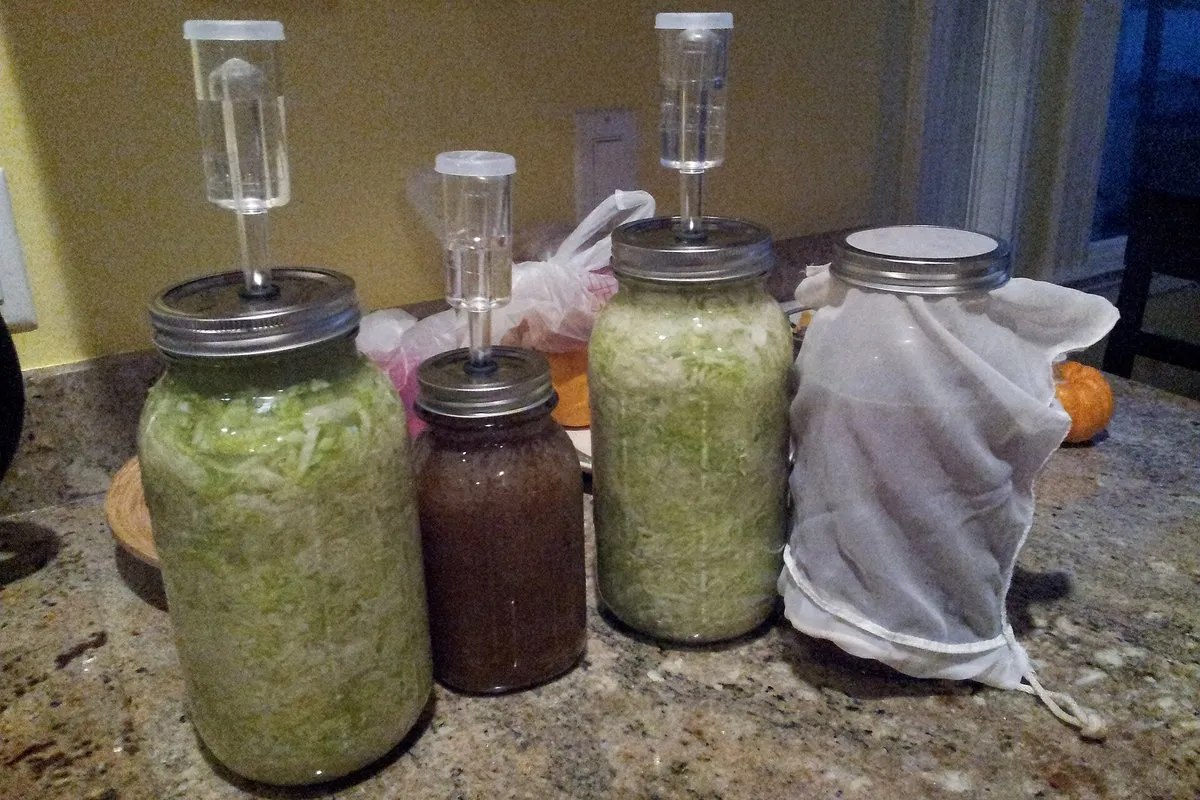
Beginner Vegetable Ferments 101: Sauerkraut & Kimchi Basics
Fermentation is the third word in our name for a reason. At Fungi, Flora & Ferment, vegetable ferments—especially sauerkraut and kimchi-style pots—are approachable kitchen projects when you understand salt, cleanliness, and what a healthy ferment looks and smells like.
Fermenting vegetables at home is simple and safe when you follow a few habits. You’ll learn which vegetables are easiest, brine jars vs. salting cabbage dry, how much salt to use, and how to spot a jar that’s gone wrong.
What Vegetable Fermentation Is Doing
In classic sauerkraut and many kimchi styles, naturally present lactic acid bacteria (LAB) convert sugars in vegetables into acids. Over days to weeks, pH drops, flavor sharpens, and the environment becomes less friendly to many spoilage organisms—when salt, temperature, and anaerobic-leaning conditions are in a sensible range.
You are not “just leaving cabbage on the counter.” You are guiding a microbial process with salt, submerged vegetables, time, and observation.
Which Vegetables Work Well for Beginners
Start with firm, fresh produce from a local market or garden. Soft or damaged vegetables ferment unevenly and spoil more easily.
Reliable first jars
Cabbage (Brassica oleracea var. capitata) — the classic self-brining sauerkraut base; shreds release juice when massaged with salt.
Napa cabbage (Brassica rapa subsp. pekinensis) — the usual beginner kimchi cabbage; salted first, then coated with a chili-aromatic paste.
Carrots (Daucus carota) — sweet, sturdy sticks or coins that hold texture in mixed jars or simple brine ferments.
Radish / daikon (Raphanus sativus) — crisp and peppery; common in kimchi-style pots and mixed vegetable jars.
Cucumber (Cucumis sativus) — often fermented as brine pickles (whole or spears in salt water), not a self-brining massage ferment. Use firm, unwaxed cukes when you can; keep them fully under brine.
Mixed vegetable jars — cabbage plus carrot, radish, onion (Allium cepa), or garlic (Allium sativum) in one pack. Keep pieces similar in size so they ferment evenly, and keep everything submerged.
Save very soft summer squash, leafy greens alone, or experimental low-salt sealed jars for later. Beginners do best with cabbage-forward or firmly brined projects.
Brine vs Self-Brining (Cabbage Massage)
Two common kitchen patterns show up in beginner pots:
Self-brining (cabbage massage)
Shred cabbage, weigh it, add salt by weight (often ~2%), and massage until the cabbage releases its own juice. That juice is the brine. Classic sauerkraut and our Crisp Cabbage Ferment and Classic Sauerkraut recipes use this approach. You usually do not start by pouring in a pitcher of salt water.
Added brine (salt water)
Some vegetables—cucumber pickles, many mixed sticks, cauliflower florets—do not release enough liquid on their own. You dissolve salt in water (often in a similar percentage ballpark by weight of water, per a trusted recipe), pour it over the packed vegetables, and weight them under the liquid.
Kimchi sits a bit between: you often salt the cabbage first (rub or soak) to draw water and season, then rinse or drain as the recipe says, then mix with a seasoning paste and pack. Follow a written formula rather than guessing on batch one.
Shared rule for both styles: vegetables stay under the liquid. Floating pieces dry out and invite trouble. Use a clean weight.
Core Equipment (Keep It Simple)
Clean jar or crock (food-safe)
Clean weight to keep vegetables submerged under brine
Lid system that allows gas escape (loose lid, airlock, or burping schedule)
Scale (strongly recommended for salt percentages)
Fresh vegetables and salt without anti-caking additives that bother you (many beginners use plain canning/kosher salt—check your label preferences)
Wash hands, tools, and jars. You do not need a laboratory—just ordinary kitchen hygiene.
Sauerkraut Basics
Sauerkraut is typically shredded cabbage (Brassica oleracea var. capitata) massaged with salt until brine forms, packed tightly, weighted under brine, and fermented cool-room to cellar-cool depending on your house.
High-level salt ratio thinking
Many home educators teach sauerkraut in a roughly 2% salt by weight of cabbage ballpark (about 20 grams salt per 1000 grams cabbage) as a common starting framework. Some traditional ranges run a bit lower or higher depending on style and temperature.
Use a scale. Volume spoons vary. Weigh cabbage, calculate salt, and take notes so you can repeat success.
Process sketch
Weigh shredded cabbage.
Add calculated salt; massage until brine appears.
Pack into jar, pressing out air pockets.
Weight cabbage so brine covers it.
Ferment out of direct sun; burp if needed.
Taste over time; refrigerate when you like the flavor.
Optional: caraway, juniper, or apple for culinary variation—still keep vegetables submerged.
Full recipes: try our Classic Sauerkraut (Brassica oleracea): Quart Jar for the named sauerkraut path, or the Crisp Cabbage Ferment when you want the texture-focused twin jar.
Kimchi Basics (Home-Style Overview)
Kimchi is a family of Korean fermented vegetable dishes—not one single recipe. Beginner home pots often use napa cabbage (Brassica rapa subsp. pekinensis), salt, and a paste with chili flakes, garlic, ginger, and other aromatics, sometimes with radish (Raphanus sativus) and scallion (Allium fistulosum / green onion types).
Salt stage
Many methods salt cabbage first (brine soak or rub) to draw water and season, then rinse or drain per recipe, then mix with the seasoning paste. Salt levels vary by tradition and recipe—follow a trusted formula rather than improvising from memory on your first batch.
Process sketch
Salt cabbage as your recipe directs; drain as directed.
Mix seasoning paste (culinary chili, garlic, ginger, etc.).
Coat cabbage; pack into a jar with some headspace.
Keep mostly submerged; ferment cooler than a hot kitchen when possible.
Refrigerate as flavor develops to slow the ferment.
Kimchi can be spicier, funkier, and more aromatic than sauerkraut.
Full home jar: see Beginner Napa Kimchi for a clear salt → rinse → paste → pack → ferment → fridge walkthrough.
Simple Mixed-Vegetable Ferment Sketch
A mixed jar is a friendly second project after plain cabbage. Keep it high-level:
Cut firm vegetables into similar sticks or shreds—cabbage, carrot (Daucus carota), radish (Raphanus sativus), a little onion or garlic if you like.
Either massage cabbage-heavy mixes with ~2% salt by vegetable weight until brine appears, or pack non-juicy mixes and cover with a prepared salt brine from a trusted percentage.
Pack tightly, weight under liquid, leave headspace, and ferment cool out of direct sun.
Taste with a clean utensil when the jar smells pleasantly sour; refrigerate when the flavor suits you.
This is a pattern, not a full recipe—use the same submersion and salt-by-weight habits as sauerkraut. When in doubt, start with a single-cabbage jar first.
What “Good” Usually Looks and Smells Like
Healthy lactic ferments often smell sour, tangy, or pleasantly funk-cabbage—not like rotten garbage, bleach, or spray paint. Bubbles can be normal early on. Brine may cloud. Vegetables stay under brine.
Stop and discard (do not taste) if you see fuzzy mold on the surface that you cannot confidently manage per trusted food-preservation guidance, if the smell is putrid, or if anything about the jar feels clearly wrong. When beginners are unsure, the safest cook’s choice is to compost the batch and restart with better submersion and salt notes.
White Kahm yeast can appear on some ferments; experienced fermenters learn to distinguish common film yeasts from mold—but beginners should use reputable visual guides and err on the side of caution.
Is Botulism a Worry?
Clostridium botulinum is a bacterium that can produce a dangerous toxin in certain low-acid, anaerobic conditions—classically discussed with improperly canned low-acid foods. Vegetable lactic ferments that successfully acidify are a different project than canning green beans in a low-acid sealed jar without proper pressure canning.
Calm, practical points:
Use enough salt and keep vegetables submerged so lactic acid fermentation can proceed.
Do not invent “low-salt sealed warm jar” experiments as a beginner.
Do not can (heat-seal in a shelf-stable way) a ferment unless you are following a tested preservation method for that specific product.
Refrigerate finished ferments you intend to keep as refrigerator pickles/ferments.
If a jar bulges abnormally in storage, smells alarmingly wrong, or fails basic quality checks, discard it without tasting.
Infants and medically vulnerable people have special food safety considerations—follow current public health guidance for those groups.
The goal is respect, not anxiety. Thousands of households ferment cabbage successfully with salt, submersion, time, and cold storage.
Temperature and Timing
Warmer rooms ferment faster; cooler rooms ferment slower and often more cleanly for beginners. Sauerkraut and kimchi can be tasty in several days to several weeks. Taste (with a clean utensil) is your culinary guide once the ferment smells and looks normal.
Common Beginner Fixes
Issue | Likely angle | Adjustment next time |
|---|---|---|
Dry pack, no brine | Not enough salt massage / juice | Massage longer; check salt % |
Floating veggies | Insufficient weight | Better weight; more brine |
Too salty | High salt % | Scale carefully; rinse lightly only if recipe allows |
Too fast / soft | Warm room | Cooler spot |
How This Fits Fungi, Flora & Ferment
Here in Michigan, we love the full triangle: wild fungi education, flora craft, and fermentation. Ferments do not require foraging—but they share the same values: patience, cleanliness, sensory attention, and honest labeling.
Next Steps
Read this overview, then pick one jar: Classic Sauerkraut, Crisp Cabbage Ferment, or Beginner Napa Kimchi.
Weigh your vegetables. Write down the salt percentage. Keep everything under brine.
Taste over time; refrigerate when you like the flavor.
More ferment recipes are on Learn.
Key takeaway: Salt by weight, keep vegetables submerged, trust your senses, refrigerate finished pots, and treat food safety as calm competence.
Cover photo: User:Greg G / Wikimedia Commons (CC BY-SA 3.0), cropped
