
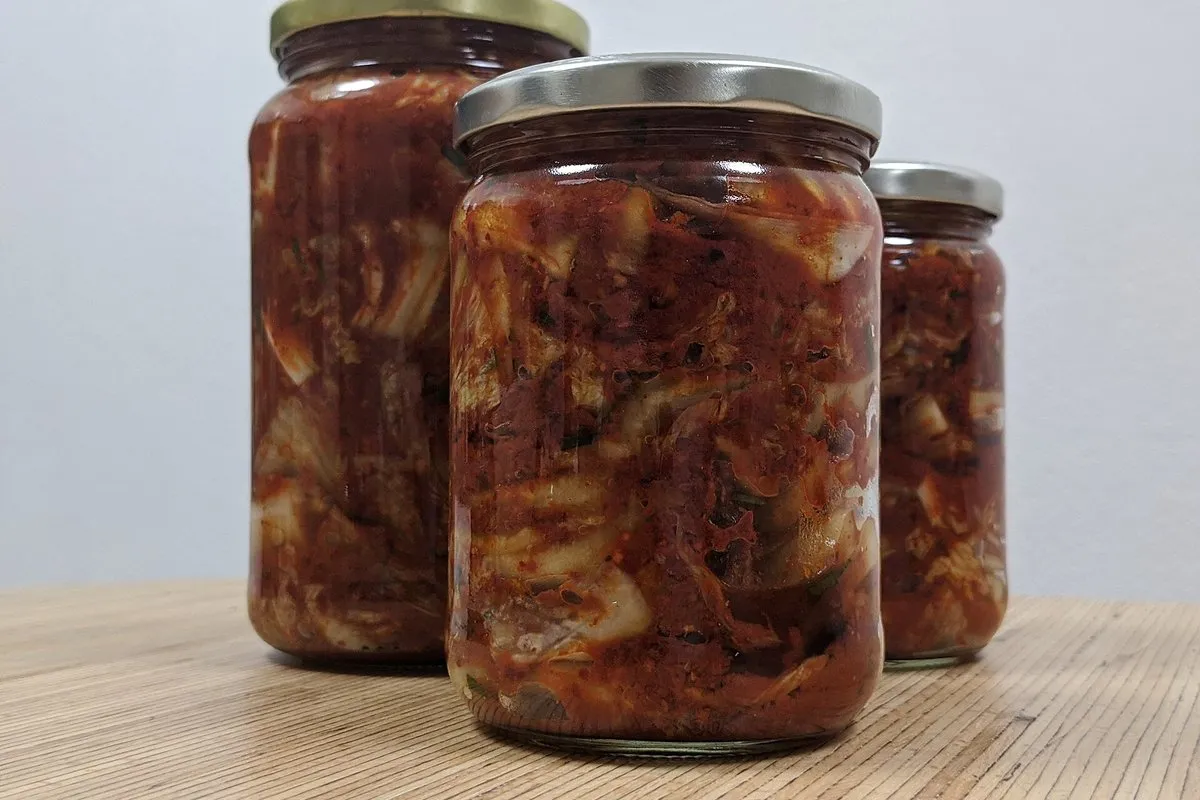
Beginner Napa Kimchi (Brassica rapa subsp. pekinensis): Home Jar
Kimchi is a family of Korean fermented vegetable dishes—not one single “correct” jar. This home-style beginner recipe from Fungi, Flora & Ferment is a simple napa cabbage jar you can make at home.
For salt thinking, brine habits, and calm safety context, read Beginner Vegetable Ferments 101 first. Prefer a milder cabbage path? See Classic Sauerkraut or Crisp Cabbage Ferment.
Yield & Timing
Makes: about 1–2 quarts depending on head size and how tightly you pack
Active prep: about 45–75 minutes (plus salting wait)
Salt stage: often 1–2 hours (or overnight in the fridge for a slower salt, if you prefer and stay within a trusted method)
Ferment window: often 2–7 days at cool room temperature, then refrigerate (taste as you go; houses vary)
Ingredients
Cabbage & salt stage
1 medium napa cabbage (Brassica rapa subsp. pekinensis), about 1.5–2 kg / 3–4½ lb, trimmed and cut into quarters or wide strips
Salt for the salt stage — many beginner home methods use a generous rub or a saltwater soak. A practical starting pattern: dissolve about ¼–⅓ cup (roughly 50–70 g) plain salt in enough water to cover the cabbage in a bowl, or rub salt between leaves per a trusted visual guide. Goal: cabbage bends without snapping and tastes seasoned, not rock-hard raw.
Cool water for soaking/rinsing
Seasoning paste (culinary)
3–5 Tbsp gochugaru (Korean chili flakes), or to taste — if unavailable, use a culinary chili flake blend that is not smoked-hot beyond your comfort; flavor will differ from gochugaru, and that is fine for a home jar
4–6 cloves garlic (Allium sativum), minced or grated
1–2 Tbsp fresh ginger (Zingiber officinale), grated
3–5 scallions (green onions; often Allium fistulosum or similar bunching types), cut into 1–2 inch pieces
Optional: 150–250 g daikon radish (Raphanus sativus), peeled and cut into matchsticks
Optional culinary sweetener: 1–2 tsp sugar or a spoon of grated apple/pear (some home recipes use this for balance—not required)
Optional: a splash of fish sauce or a pinch of salted shrimp paste only if that fits your kitchen and diet—many vegetarian home jars skip it
Notes: Adjust chili heat for your household. Keep tools and bowls clean.
Gear
Large bowl for salting
Clean quart or half-gallon jar(s) or similar food-safe vessel
Clean weight or a snug pack that keeps cabbage mostly under its juices
Lid you can loosen/burp or an airlock
Gloves optional (chili + garlic can sting)
Method
1. Salt the napa
Trim wilted outer leaves. Cut cabbage into quarters or wide strips. Soak in salt water or rub salt between leaves so cut surfaces get seasoned. Wait until leaves are flexible and salty-tasting (often 1–2 hours for a soak; times vary). Flip or stir once so salting is even.
2. Rinse and drain
Rinse thoroughly under cool water to remove excess surface salt. Taste a thick rib—if it is harshly salty, rinse again. Drain well in a colander 15–30 minutes. Too much rinse water left in the bowl dilutes the paste.
3. Make the paste
In a clean bowl, mix gochugaru (or culinary chili flakes), garlic (Allium sativum), ginger (Zingiber officinale), scallion, and optional daikon (Raphanus sativus) plus any optional sweetener or fish sauce. Aim for a thick, spreadable paste.
4. Coat and pack
Wear gloves if you like. Gently work the paste between cabbage leaves and over daikon. Pack into clean jar(s), pressing down so juices rise and air pockets shrink. Leave headspace—kimchi can bubble.
5. Ferment cool
Keep cabbage mostly submerged under its own juices (press daily if needed; a clean weight helps). Loosely lid or airlock. Ferment out of direct sun at cool room temperature when you can—hot kitchens speed softening and funk.
Taste after 2–3 days with a clean utensil. When the tang and aroma suit you, move to the refrigerator. Many home jars keep developing slowly in the fridge.
6. Fridge storage
Refrigerate finished kimchi. Use clean utensils. Keep it covered and preferably under its liquid. Discard without tasting if it smells putrid, shows fuzzy mold you cannot confidently manage per trusted food-preservation guidance, or otherwise feels clearly wrong.
Safety Notes
Keep vegetables submerged; refrigerate when the flavor is where you want it.
Do not can (shelf-stable heat-seal) this kimchi unless you follow a tested preservation method for that exact product.
Infants and medically vulnerable people have special food-safety considerations—follow current public health guidance.
Broader calm safety notes (including botulism awareness without panic) live in Beginner Vegetable Ferments 101.
Serving Ideas
Beside rice, eggs, or roasted vegetables
In grain bowls with local mushrooms
Folded into grilled cheese or quesadillas (culinary fun, not tradition-policing)
As a bright, spicy side with beans or potatoes
Soft Shop Tip
More ferment recipes are on Learn.
Salt with care. Rinse well. Pack with respect. Fridge when it tastes like your kitchen’s kimchi.
Cover photo: Shisma / Wikimedia Commons (CC BY 4.0), cropped
Carry your cabbages home in style
Our organic cotton Botanical Tote holds up to 30 pounds of market produce, and its 5 inch gusset keeps your jars standing upright on the drive home. It costs $31.99 and ships to the 48 contiguous states and DC.
