
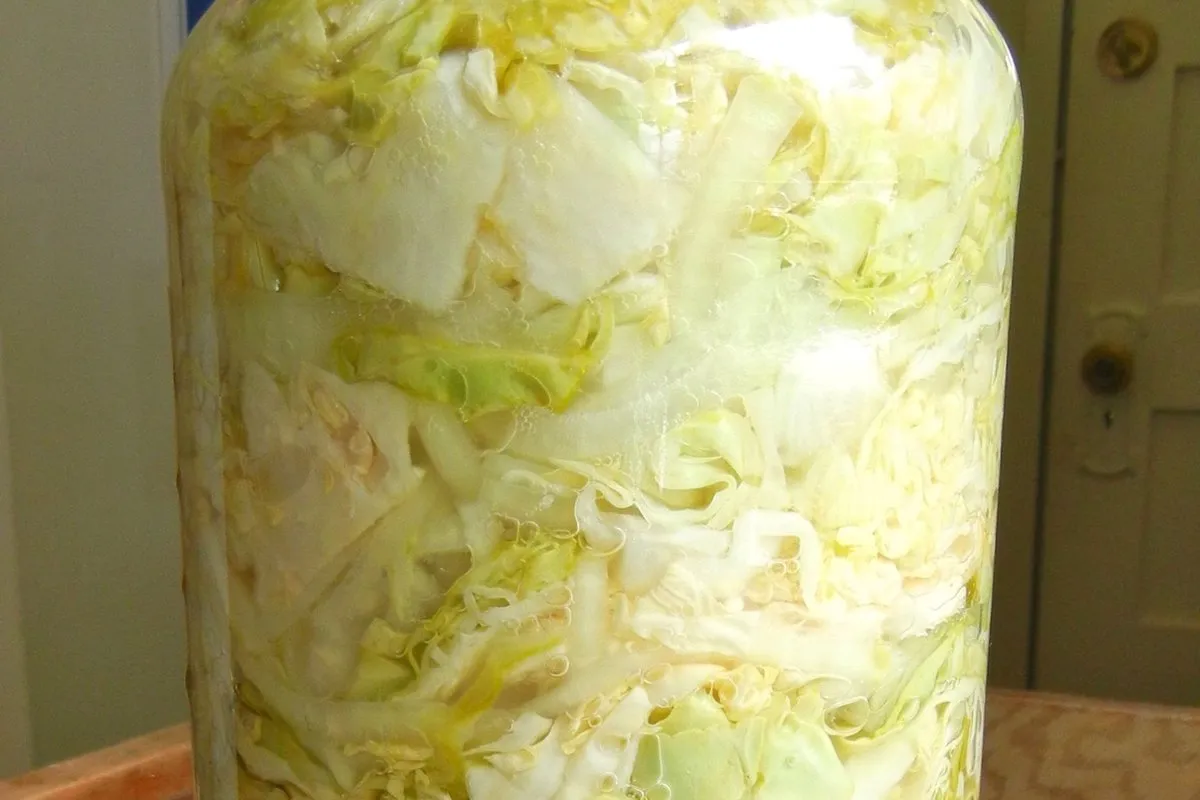
Classic Sauerkraut (Brassica oleracea): Quart Jar
Classic sauerkraut is shredded cabbage (Brassica oleracea var. capitata) plus salt, time, and a cool counter. This original quart-jar recipe from Fungi, Flora & Ferment is the named sauerkraut path—same clean habits as our texture-focused Crisp Cabbage Ferment, with a slightly wider ferment window and the familiar caraway/juniper options many cooks expect when they say “sauerkraut.”
For salt thinking, brine vs self-brining, and calm safety habits, read Beginner Vegetable Ferments 101 first.
How This Differs from Crisp Cabbage
Jar | Focus |
|---|---|
Classic Sauerkraut (this post) | Named sauerkraut recipe; 5–21 day cool ferment window; optional caraway & juniper as traditional culinary notes |
Texture-first twin; same ~2% salt massage method; shorter “taste early for snap” emphasis |
Either jar teaches the same core skill: weigh, massage, sink under brine, refrigerate when the flavor is right.
Yield & Timing
Makes: about 1 quart (1 L) packed sauerkraut
Active prep: 20–30 minutes
Ferment window: often 5–21 days at cool room temperature (taste as you go; warmer rooms run faster)
Then refrigerate to slow the ferment
Ingredients
About 900–1000 g green cabbage (Brassica oleracea var. capitata), cored and thinly shredded (roughly one medium head)
Salt at 2% of cabbage weight — for 1000 g cabbage, use 20 g salt; for 900 g, about 18 g
Optional culinary add-ins (keep modest so brine still covers):
1–1½ tsp whole caraway seed (Carum carvi)
4–8 juniper berries (Juniperus communis), lightly crushed
A few black peppercorns (Piper nigrum), optional
Salt notes: Use a scale. Volume spoons are inconsistent. Many home educators use a roughly 2% salt-by-weight-of-cabbage framework for classic sauerkraut. Plain canning or kosher salt without unwanted additives is a common beginner choice—read your label. Observation still matters: look, smell and taste as it goes.
Gear
Clean quart jar or similar food-safe vessel
Clean weight (glass weight, small jar, or outer cabbage leaf as a follower)
Lid you can loosen/burp or an airlock system
Kitchen scale
Mixing bowl and clean hands or gloves
Method
1. Weigh and salt
Shred cabbage. Weigh it. Calculate 2% salt (grams cabbage × 0.02). Sprinkle salt over cabbage in a bowl. Add optional caraway or juniper if using.
2. Massage until brine appears
Massage and squeeze 5–10 minutes until the cabbage looks wet and a pool of brine forms when you press a handful. This is self-brining—the liquid should come mostly from the cabbage itself, not from a pitcher of salt water. (See Ferments 101 for brine vs self-brining.)
3. Pack tight
Pack cabbage into the jar a handful at a time, pressing firmly to remove air pockets. Pour any bowl brine in. Leave some headspace at the top.
4. Weight under brine
Press until brine rises above the cabbage. Add your clean weight. If brine is shy after packing, wait 20–30 minutes and press again; cabbage often releases more. As a last resort for a slightly dry pack, dissolve a pinch of extra salt in a spoon of filtered water and add just enough to cover—then note it for next time.
5. Ferment cool and observe
Loosely lid or airlock. Keep the jar out of direct sun at cool room temperature when you can. Burp daily if using a tight lid. Bubbles and a tangy cabbage aroma are common as fermentation progresses.
Taste after about 5 days with a clean fork. Many kitchens like sauerkraut somewhere between one and three weeks—brighter and crisper earlier, deeper and softer later. When the sourness suits you, move the jar to the refrigerator.
6. Store
Keep refrigerated, still preferably under brine. Use clean utensils each time you serve.
What Good Usually Looks Like
Healthy lactic cabbage ferments often smell sour and cabbage-bright—not putrid, bleachy, or like solvent. Brine may cloud. Vegetables stay submerged.
Do not taste batches that smell rotten, show fuzzy mold you cannot confidently manage per trusted food-preservation guidance, or otherwise feel clearly wrong. When beginners are unsure, compost and restart with better submersion and weighed salt. More detail lives in Beginner Vegetable Ferments 101.
Serving Ideas
Beside sausages, roasted potatoes, or beans
On mushroom toast for acid contrast
Folded into grain bowls or grilled cheese
As a bright side with greens and eggs
Want the spicy aromatic path next? Try Beginner Napa Kimchi.
Soft Shop Tip
More ferment recipes are on Learn.
Weigh the salt. Sink the cabbage. Refrigerate when it tastes like sauerkraut to you.
Cover photo: Bdubay / Wikimedia Commons (CC BY-SA 3.0), cropped
Carry your cabbages home in style
Our organic cotton Botanical Tote holds up to 30 pounds of market produce, and its 5 inch gusset keeps your jars standing upright on the drive home. It costs $31.99 and ships to the 48 contiguous states and DC.
