Purple-Spored Puffball (Calvatia cyathiformis) in Michigan
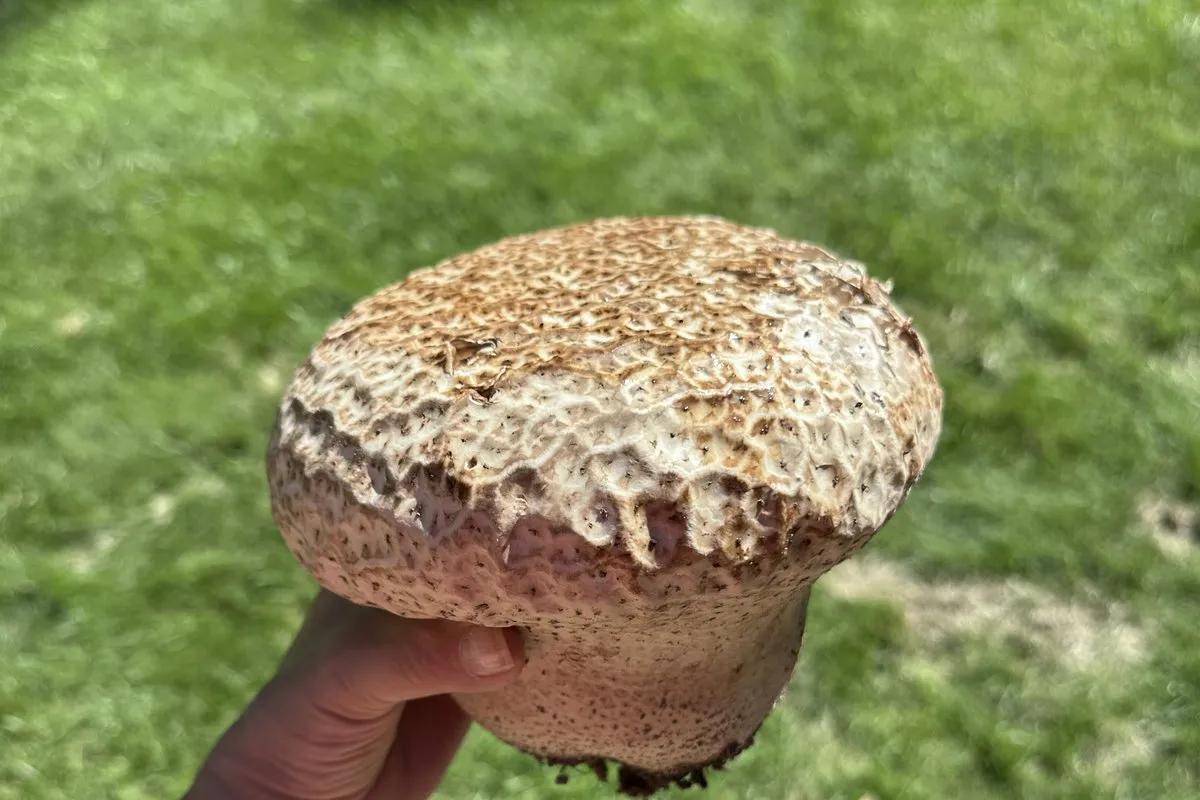
The purple-spored puffball, Calvatia cyathiformis, stands out late in the season in Michigan meadows, lawns and open woods. In Clare County and across the northern Lower Peninsula, foragers often spot its upside-down pear or pestle shape. It starts out pale. With age, the top gets cracked or scaly. Once it’s past the eating stage, the inside turns into a purple spore mass. It’s pretty to look at, but it’s not for the pan.
Cut every puffball open before you cook it. Only pure white inside is good to eat.
Read this page along with our main cut-open guide: Puffball Mushrooms (Calvatia & Lycoperdon): Cut-Open Rule.
Why This Puffball Matters Here
Calvatia cyathiformis (purple-spored puffball) is one of the bigger puffballs you’ll meet in late summer and fall. It’s a close cousin of other Calvatia puffballs and of the often smaller Lycoperdon puffballs. Its spore color when mature and its overall shape help narrow the ID. It usually grows in grassy places: meadows, yard edges (with permission), pastures and clearings in open woods. It’s less likely deep under a closed canopy alone.
What It Looks Like: Shape, Surface and Age
Overall shape
The classic shape of Calvatia cyathiformis is an upside-down pear, pestle or club.
After the spore mass weathers away, a cup-like sterile base (the part with no spores) may be left behind.
It’s often bigger than many Lycoperdon puffballs. Size alone never settles an ID.
Outer surface
Young ones may look fairly smooth and pale.
As the purple-spored puffball (Calvatia cyathiformis) matures, the top often gets cracked into patches (areolate), or scaly.
The color changes with age and weather. Outside color is a clue. It is not a green light to cook.
Spore stage (past eating)
Once it’s past the young eating stage, the inside spore mass (the gleba) turns purple.
Purple, brown or olive inside means too late and not for the pan. Leave these to spread their spores.
Always Cut It Open First
Do this for every mushroom you think might be a purple-spored puffball (Calvatia cyathiformis), or any Calvatia or Lycoperdon puffball:
Slice it top to bottom, right through the base.
Look at the whole inside in good light.
Only think about cooking it if the flesh is pure white, even and firm. No yellow, brown, purple or olive. No powdery spore mass.
You must not see the outline of a cap, gills or stem forming inside. A “mushroom inside a mushroom” is not a puffball.
Purple, brown or olive inside means it’s too late or the wrong fungus for the skillet. Pure white only, after a positive ID.
It’s the same check as in our main cut-open puffball guide. This page doesn’t replace that knife test.
Habitat in Michigan
Look for purple-spored puffball (Calvatia cyathiformis) in:
Open meadows and grassy clearings
Lawns and yard edges (you need permission on private land)
Open woods, woodland edges and disturbed grassy soil
It usually shows up from late summer into fall when there’s enough rain. Local weather sets the timing. Habitat helps you scout. It doesn’t replace an ID. Skip sprayed turf, roadside pollution and yards heavy with chemicals. A white inside doesn’t mean it’s clean. Keep private spots private. Our foraging ethics guide explains why.
Telling It Apart from Other Puffballs
Other Calvatia
When young, larger Calvatia species can share the same “big white blob” look. To tell Calvatia cyathiformis from its neighbors, check the mature spore color, what the sterile base does and how the surface cracks. Regional keys help. Mentors and regional field guides matter more than one phone photo.
Lycoperdon puffballs
Lycoperdon species are often smaller. Depending on the species, they may have short sterile bases or spiny or warty surfaces. Young white insides can look alike when cut. That’s why the cut-open check works for both groups. It’s also why naming the exact species still takes practice.
Earthballs (Scleroderma and similar)
Earthballs often have dark, firm insides, even when fairly young. That’s not the soft, pure white flesh of a puffball at the eating stage. Learn them with a mentor. Don’t taste-test your way out of a mix-up.
Dangerous Look-Alikes: Buttons and “Eggs”
This is the most important safety step for any round or pear-shaped white fungus:
Amanita buttons and other button mushrooms
Young Amanita buttons can look roughly round from the outside. So can other gilled mushrooms still in the “egg” or button stage. Some deadly or seriously toxic Amanita species grow in Michigan woods. Cutting it open shows gills, a cap outline or a stem forming inside. A young puffball at the eating stage is solid white flesh, with none of those mushroom parts inside.
Every single time: the outside shape can fool you. The top-to-bottom cut tells the truth. If you see shapes forming inside, walk away. No skillet. No “maybe.”
A positive ID means you know you have a purple-spored puffball (Calvatia cyathiformis). Or it’s another puffball you can name with confidence at your skill level. And it passed the pure white inside check.
Cooking Notes (After Positive ID Only)
Young, confirmed purple-spored puffball (Calvatia cyathiformis) with a pure white inside is sometimes sliced and cooked thoroughly. People sauté or bake it, or cook it like a soft “steak.”
Cook thoroughly. Don’t serve it raw.
Use fresh, clean puffballs from clean ground. Throw out any piece that changes color once cut.
Some people are sensitive. Try a little at first. When in doubt, throw it out.
Never push a beginner to “just try a bite.” Never skip the knife test, especially with anything that might be an Amanita button.
Good Habits in the Field
Take only what you’ll cook soon. Leave purple, brown or powdery puffballs to spread spores.
Ask permission on private land.
Treat the cut-open check as a safety habit, not a shortcut to a find.
When learning, take photos where it grows: the whole puffball, the cracked top if there is one, and the top-to-bottom cut.
Keep Learning
Purple-spored puffball (Calvatia cyathiformis) rewards a careful eye. Look for the pestle shape, the cracked top when mature and the purple spore mass once it’s past eating. And your knife always comes out before the pan. Review the main puffball cut-open rule. Then explore more guides on morels, chanterelles, oysters and foraging ethics on Learn.
Key takeaway: Upside-down pear Calvatia cyathiformis grows in grass and open woods. Cut every one open. Only pure white inside is worth cooking. Purple, brown or olive inside means too late, not dinner.
