Hedgehog Mushrooms (Hydnum) in Michigan
Hedgehog mushrooms are Hydnum species, often nicknamed sweet tooth. They’re one of the easiest finds in Michigan woods once you flip them over. In Clare County and the oak–maple–pine country of the northern Lower Peninsula, foragers learn to look past the plain pale-to-orange cap. Check the underside for soft spines or teeth instead of gills or pores. That one habit sets hedgehogs apart from a long list of mushrooms with a similar shape.
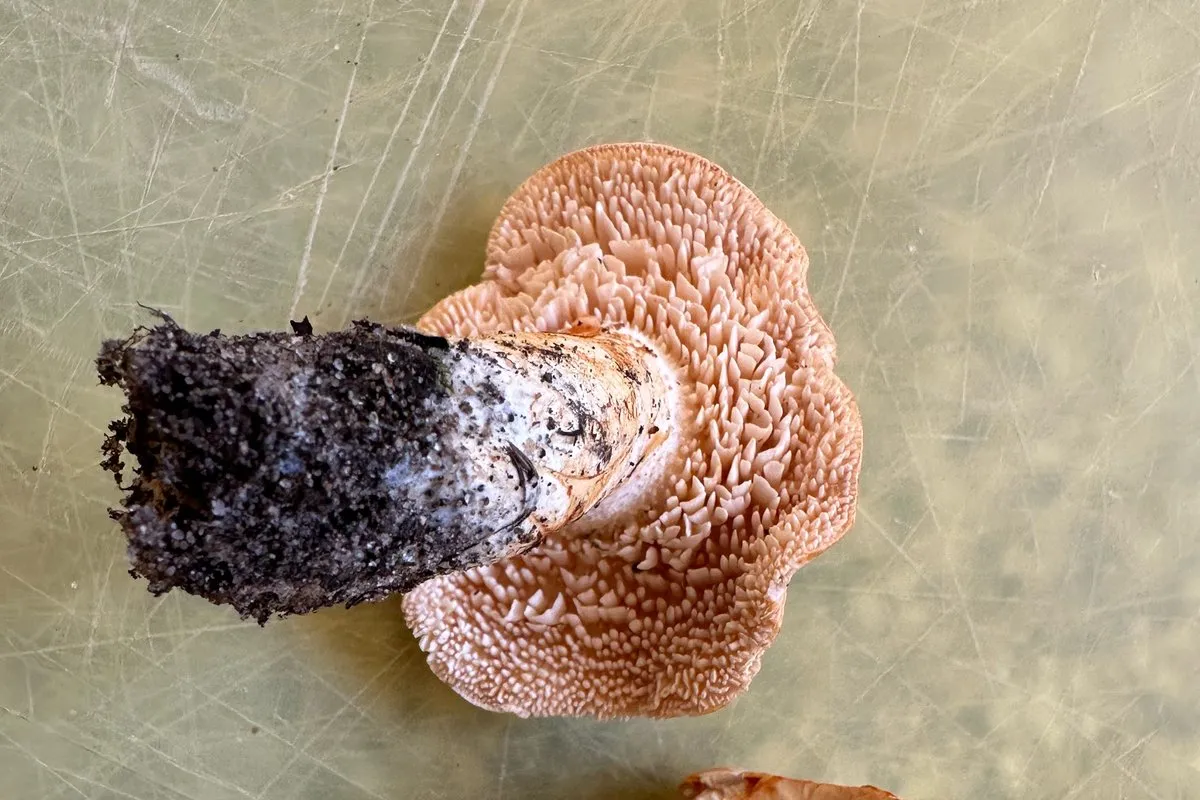
Before you cook one, look under the cap. Hedgehogs have soft little spines there, not gills.
Photo note
Field close-up of Hydnum teeth (spines) on the underside.
Photo: Fungi, Flora & Ferment
What Are Hedgehog Mushrooms?
Around here, “hedgehog” or “sweet tooth” usually means Hydnum. These are fleshy mushrooms that grow from the ground. Their underside is covered in hanging spines (teeth) instead of true gills or pores. Cooks often talk about Hydnum repandum and its close pale-to-orange relatives. Regional mentors may pin down the species with keys, a microscope and local experience. Color runs from cream and buff to apricot or orange, depending on species, age and weather.
Hedgehogs partner with tree roots and fruit from the soil in the woods. They don’t grow as shelves on a stump like chicken of the woods (Laetiporus) or layered oysters (Pleurotus).
Habitat in Michigan Woods
Look for Hydnum on the forest floor in:
Mixed hardwoods with oak and maple
Mossy patches and needle and leaf litter in stands mixed with pine
Open woodland floors after soaking rains in late summer and fall
Scattered singles or small groups, not dense clusters on wood
They usually show up from late summer into fall when moisture returns. Your local woods set the timing. Habitat helps you scout. It never settles an ID. Don’t make up GPS pins for private or fragile spots. See our foraging ethics guide.
Identification Checklist
Cap
Often rounded to flat. It may get uneven or a little sunken with age.
Cream, buff, pale orange or deeper apricot are common in Michigan finds.
The surface may feel dry to slightly suede-like. Edges can stay rolled under when young.
Underside: spines or teeth (the key trait)
Soft, pointed spines hang from the underside, not sharp, plate-like gills.
On some, the spines run slightly down the stem.
Spines are often pale, matching the cap or a little lighter or darker.
Stem and flesh
Fleshy stem, centered or a bit off-center
Many of the edible Hydnum taught locally have pale or whitish flesh when broken.
Break or cut one to check for odd colors, insects or too much water.
How it grows
From soil under trees (it partners with tree roots)
Scattered or in loose groups across a patch of woods
Positive ID means you can show spines instead of gills. The habitat and flesh match. And you can explain why the look-alikes don’t fit. Do all that before the basket becomes dinner.
Look-Alike Caution
Checking the underside carefully keeps beginners safe:
Gilled mushrooms with pale or orange caps can look like hedgehogs from above. Flip every one. True gills means it’s not Hydnum.
Tooth fungi on wood (other toothed groups) may have spines too. But they grow on logs or buried wood, so note what it’s growing from.
Chanterelles (Cantharellus) can have similar colors. But they have false gills (blunt ridges), not hanging teeth. Compare with our chanterelle guide.
Old, waterlogged or insect-tunneled ones are poor eating, even when the genus ID is right.
When unsure, leave it. Bring clear photos of the top, the underside spines, the stem, the broken flesh and the habitat to a skilled identifier.
Harvest Notes
Get permission first on private land.
Cut or pinch cleanly. Don’t tear up moss carpets and mycelium mats.
Take only what you’ll clean and cook or dry soon. Spines trap grit and needles.
Leave some scattered behind so the patch keeps fruiting for the next person.
Cooking Notes (After Positive ID)
Confirmed hedgehog mushrooms (Hydnum / sweet tooth) are excellent when cooked thoroughly:
Brush the grit out of the spines patiently. A quick rinse is fine if you dry the surface well before the pan.
Dry-sauté to cook off the water. Then finish with fat and aromatics, eggs, cream sauces or simple toast.
A mild, pleasant flavor in many cooking traditions. Still, try a little at first after a solid ID.
Dry clean extras. Label them Hydnum / hedgehog (sweet tooth), with the date and habitat.
Cook thoroughly. Don’t serve them raw. People react differently.
Drying Basics
Positive ID only.
Clean litter out of the spines. Keep pieces about the same size.
Dry until fully crisp all the way through.
Store airtight, cool and dark.
When you need them, soak them in warm liquid. Strain out any grit that settled, pat them dry and brown them in the pan.
Weather, Timing and Field Notes
Hedgehog weeks here often follow soaking rains in late summer and early fall. Keep a simple notebook:
Date and recent rain
Nearby trees (oak, maple, pine mix)
Cap color and spine length and color
Whether they’re young, prime or waterlogged
Prime hedgehogs feel fleshy and clean, with spines intact and not much litter. After heavy storms, let the woods drain a little. Then check the quality up close, not just the color from standing height.
Common Mistakes
Going by cap color alone (“pale orange in the moss, so it’s a hedgehog”)
Skipping the underside photo for your mentor
Mixing up blunt chanterelle ridges with true hanging teeth
Picking from dirty edges (sprayed lawns, industrial debris, heavy roadside exhaust)
Overpicking a small mossy pocket you found once
Slow down. Spines will still be spines after you double-check.
Keep Learning
Hedgehog mushrooms (Hydnum / sweet tooth) reward a careful look underneath. Look for soft teeth instead of gills and growth from the soil under trees. Cook with care after a positive ID. More guides are on Learn.
Key takeaway: Soft spines on the underside, growing from soil under trees. Stay humble about look-alikes, and cook thoroughly after a positive Hydnum ID.
