Chanterelles (Cantharellus) in Michigan
Chanterelles are Cantharellus species. They’re some of the most sought-after summer and early fall wild mushrooms in Michigan’s oak–maple–pine country. In Clare County and the wider woods of the northern Lower Peninsula, foragers watch for golden to egg-yolk caps. Underneath are blunt, forking ridges that run down the stem. Fresh ones often have a faint apricot-like smell.
Before you cook one, flip it over. Real chanterelles have blunt, forking ridges, not sharp gills.
What Are Chanterelles?
Among foragers, “chanterelle” usually means a Cantharellus mushroom. These are fleshy mushrooms that grow from the ground. They have false gills (ridges) that are blunt, often forked and decurrent (running down the stem). They partner with tree roots. They don’t rot wood as shelves like chicken of the woods (Laetiporus).
Color runs from pale yellow to deep orange-gold, depending on species, age and weather. In North America, talk of smooth chanterelles also brings in related groups that mentors may separate carefully. Learn your local kinds with keys and a skilled identifier. Don’t assume every yellow funnel is dinner.
Habitat in Michigan Woods
Chanterelles grow from soil and are tied to living trees. Around here, they often turn up in:
Mixed hardwoods with oak and maple
Mossy patches and open woodland floors after soaking rains
Stands mixed with pine in oak–maple–pine country
Scattered groups, not a single “shelf on a log”
They often fruit from summer into early fall, when moisture and warmth line up. Your local woods set the timing. Habitat is a clue, not a free pass. Never make up GPS pins for private or fragile spots. Read our foraging ethics guide.
Identification Checklist
Cap
Often more vase- or funnel-shaped with age. Younger caps are rounder.
Yellow to orange-yellow is common in classic “golden” chanterelles.
The edge may be wavy or stay rolled under when young.
Underside: false gills
Blunt ridges or veins, often forking
Ridges run down the stem (decurrent)
Not the sharp, paper-thin true gills of many gilled mushrooms
Flesh and smell
Many of the edible Cantharellus taught locally have pale or whitish flesh when broken.
Fresh ones may smell faintly fruity or like apricots. That’s a helpful clue, never proof on its own.
How it grows
From soil under trees (it partners with tree roots)
Often in scattered groups across a patch of woods
Positive ID means you can explain the false gills, color, flesh and habitat. You can also say why the look-alikes don’t fit. Do all that before the basket becomes dinner.
Look-Alikes to Know
Jack-o’-lantern (Omphalotus) group
These are orange gilled mushrooms that grow in clusters on wood or buried wood. They have true, sharp gills and often grow in tighter clusters on wood. That’s not the soil-grown, false-gill look of Cantharellus. Beginners mix them up when they skip checking the underside and what it’s growing from. It is not a chanterelle.
Other orange or yellow gilled mushrooms
Many gilled mushrooms share these colors. Check for true gills or blunt ridges. Check whether it’s growing from wood or soil. Add spore prints as you learn more.
Pale or “almost chanterelle” species
Related or look-alike chanterelle-type fungi exist. Some are eaten in certain traditions. Some aren’t a good target for a beginner. Being sure of the species matters.
When unsure, leave it. Bring clear photos of the top, underside, stem and habitat to a mentor.
Harvest Notes
Get permission first on private land.
Cut or pinch cleanly. Don’t tear up moss carpets.
Take only what you’ll cook or dry soon. Leave plenty to spread spores and for the next person.
Brush off grit in the field. Chanterelles can hide litter in their ridges.
Cooking Notes (After Positive ID)
Confirmed chanterelles (Cantharellus) shine when cooked thoroughly:
Dry-sauté first to cook off the water. Then add fat and aromatics.
Classic with eggs, cream sauces, chicken dinners and simple toast.
Dry clean extras for winter. Label them Cantharellus / chanterelle, with the date.
Cook thoroughly. Don’t serve them raw. People react differently.
Drying Basics
Positive ID only.
Clean gently. Keep pieces about the same size.
Dry until fully crisp.
Store airtight, cool and dark.
Soak them in warm liquid, strain the grit from the ridges, pat them dry and cook with care.
Weather, Timing and Field Notes
Chanterelle weeks here often follow soaking rains in warm weather. Keep a simple notebook:
Date and recent rain
Nearby trees (oak, maple, pine mix)
Cap color and what the ridges look like
Whether they’re young, prime or waterlogged
Waterlogged or slimy old ones are poor eating, even when the ID is right. Prime chanterelles feel fleshy and clean, with ridges still clear and well formed. After heavy storms, let the woods drain a little. Then check the quality up close, not just the color.
Common Mistakes
Going by color alone (“it’s orange-yellow, so it’s a chanterelle”)
Ignoring that it grows on wood (a red flag for jack-o’-lanterns)
Skipping the underside photo for your mentor
Overpicking a small mossy patch you found once
Posting exact map pins that send a crowd to the spot
Slow down. Chanterelles will still be chanterelles after you double-check.
Keep Learning
Chanterelles (Cantharellus) reward a careful look underneath. Look for blunt forking ridges and growth from the soil under trees. Learn to tell them from orange gilled look-alikes that love wood. More guides are on Learn.
Key takeaway: False gills that fork and run down the stem, growing from soil under trees. Rule out the look-alikes, then cook thoroughly.
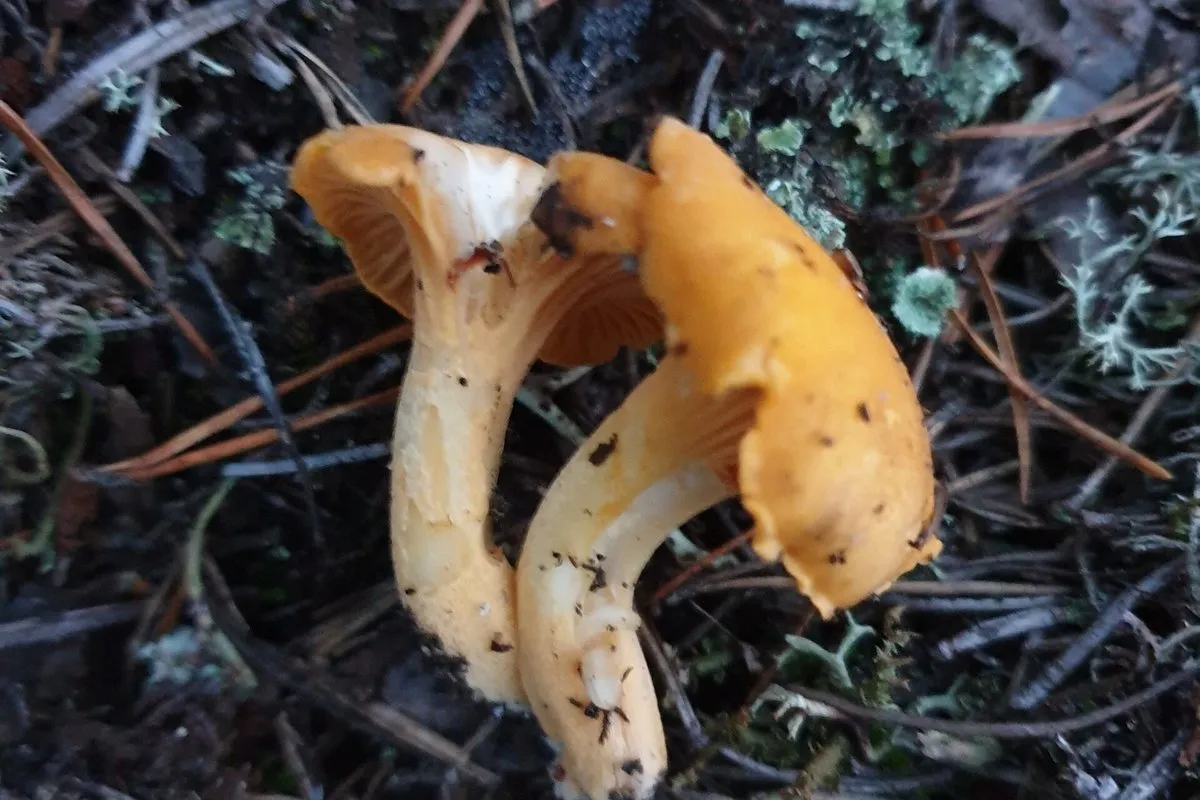
Cover photo: Cilla Moerman / Wikimedia Commons (CC BY 4.0), cropped
