
Dryad's Saddle / Pheasant Back (Cerioporus squamosus) in Michigan: ID, Season & Cooking
A friendly field guide from Fungi, Flora & Ferment. When in doubt, leave it out.
What is dryad's saddle?
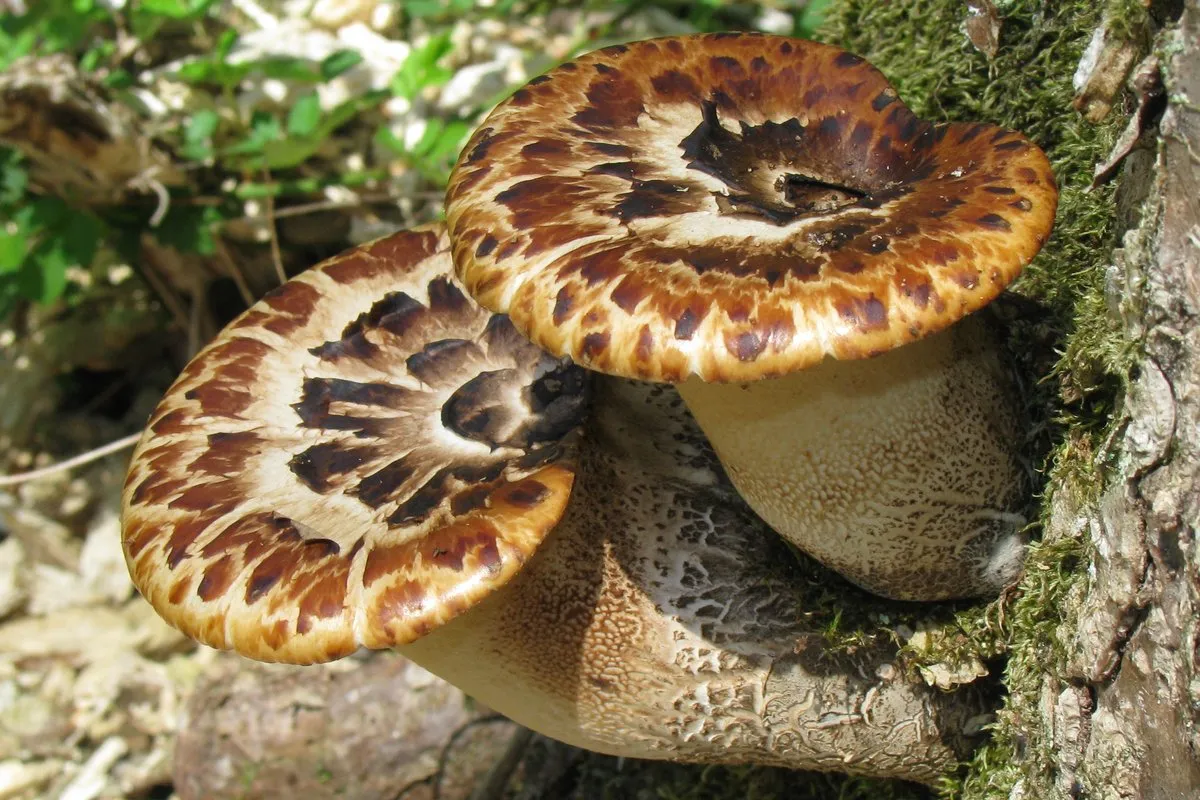
Dryad's saddle (Cerioporus squamosus) is a big, scaly shelf mushroom. Many people call it pheasant back, because the cap looks like pheasant feathers. Older books call it Polyporus squamosus.
It is one of the most common spring mushrooms in Michigan. People often find it while they are out hunting morels.
Where it grows
On dead and dying hardwoods: stumps, logs and standing trees.
Elm is a favorite. It also grows on maple, especially silver maple.
Box elder is another common host. Willow and cottonwood are worth checking too.
Look in river bottoms, yards, parks and woodlot edges, not just deep forest.
When to look in Michigan
We looked at 2,508 research-grade dryad's saddle sightings on iNaturalist in Michigan since January 2024.
May is the big month. It had 1,063 sightings (42%).
About two out of three (67%) came from April through June.
There is a smaller second season in fall. September had 343 sightings (14%).
Most sightings came from the southern Lower Peninsula. That is where many elms, maples and people are.
Timing matters more than rain for this one. The typical find had about 1.3 inches of rain in the two weeks before. Fewer than half of finds (45%) came after a wetter-than-usual two weeks for that spot. Think "spring, on dead hardwood" more than "right after a storm."
See where people are finding it on our mushroom forecast map. Turn on Mushroom sightings and pick Dryad's saddle / pheasant back.
Key ID features
Cap: cream to tan with brown, flat scales in rings. It looks like feathers.
Size: young caps can be palm-size. Old ones can grow wider than a dinner plate.
Shape: a fan or saddle shape, growing in a shelf or a small stack.
Underside: cream-colored pores, large and angular, like a honeycomb. No gills.
Stem: short and thick, often off to one side. The base is dark brown to black.
Smell: fresh ones often smell like watermelon rind or cucumber. Many foragers find the smell a helpful check.
Texture: soft and bendy when young. It turns tough and woody with age.
Look-alikes
Few mushrooms share all of these features, but check every one you pick.
Other scaly polypores
Some smaller Polyporus and Cerioporus species also have pores and a stem.
They are usually smaller, with tiny pores and no pheasant-feather pattern.
Gilled mushrooms on wood
Flip it over every time. Dryad's saddle has pores, never gills.
If you see gills, it is something else. Do not eat it.
Old, tough dryad's saddle
An old one is still dryad's saddle, but it is too tough to enjoy.
Bugs move in quickly as it ages.
In the kitchen
Pick young. The best ones are small, soft and bend easily. Pores should be tight and pale.
Use the edges of bigger caps. If a knife slides through easily, it is tender. Cut away any part that feels rubbery or woody.
Slice thin. Thin strips cook up tender and mild.
Cook well. Sauté in butter until the edges brown, or simmer in soup or broth. Never eat it raw.
Old caps: too tough to chew. Some cooks simmer them for broth and strain them out.
The flavor is mild, a little like cucumber or melon rind.
Simple safety
Only eat a wild mushroom when you are sure of the ID. Ask an experienced local identifier if you are not.
Cook it thoroughly every time.
Try a small amount the first time. Some people react to mushrooms that are fine for others.
Skip mushrooms from roadsides or sprayed yards.
Get permission on private land, and follow the rules on public land.
Keep learning
More guides on our Learn page, including oyster mushrooms and morels, two more spring favorites.
Wondering what fungi grow on your property? See our property mushroom surveys.
Want wild mushrooms without the hunt? Browse our dried wild mushrooms.
Get new finds and guides by email: join our list.
Season numbers: research-grade iNaturalist sightings in Michigan, January 1, 2024 – October 17, 2026. Rain: gridMET daily rainfall.
Cover photo: Dan Molter / Wikimedia Commons (CC BY-SA 3.0), cropped
