Morels (Morchella) in Michigan
Spring morels are Morchella species. Many Michigan foragers wait all winter to see them. In Clare County and the oak–maple–pine country of the northern Lower Peninsula, a few things can bring them up. Look for warm days after cool nights, moist soil and the right woodland edges. That’s when honeycombed caps show up in the leaf litter and around aging trees. They’re worth the wait, and they call for careful ID.
Before any morel goes in the pan, slice it top to bottom. A true morel is hollow all the way through.
What Are Morels?
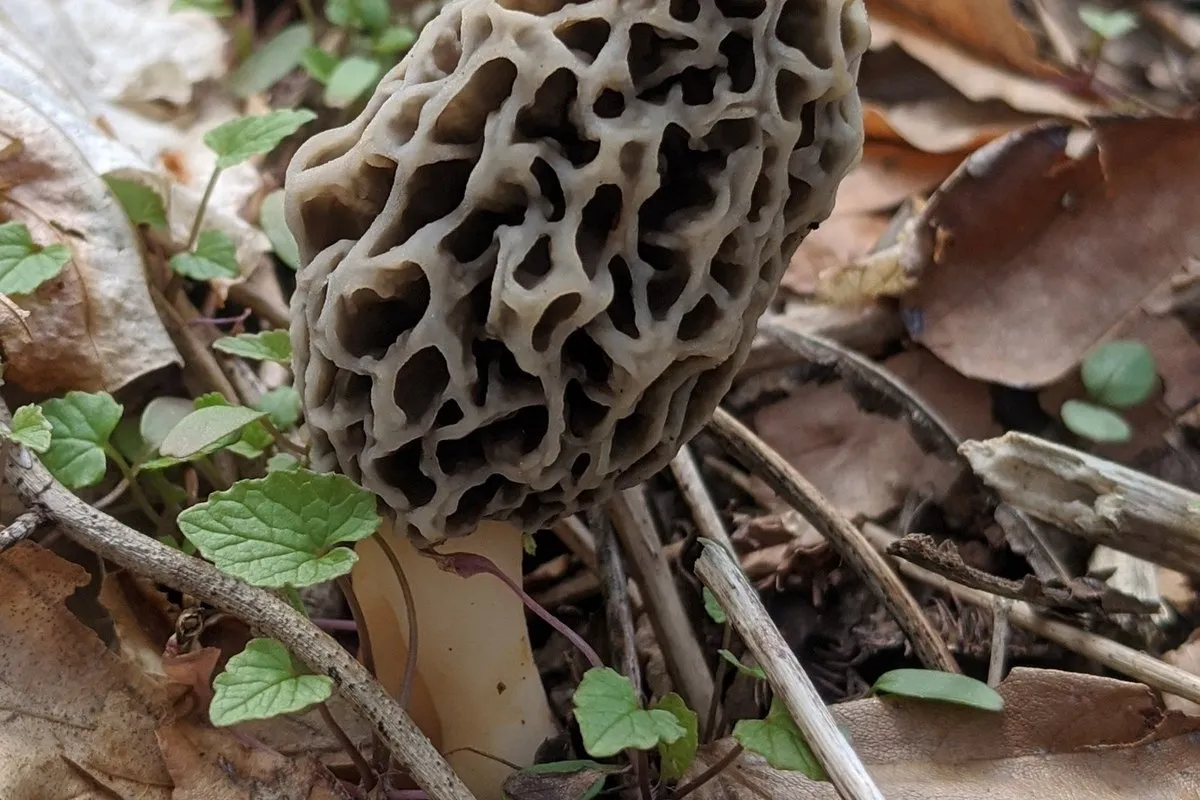
“Morel” usually means a true morel in the genus Morchella. These are cup fungi (ascomycetes). The pitted, honeycomb-like cap is joined to the stem. Sliced lengthwise from tip to base, a true morel has a hollow inside. That hollow inside is the first thing to check.
Color and size vary by species and age. Locals talk about yellow, blond, gray and dark “black” morels. Scientists have changed their names over the years. So field mentors often teach groups of look and habitat patterns. They don’t force every morel into one outdated Latin name from a photo caption. Learn local patterns with a skilled identifier.
Season and Habitat
Morels are a spring mushroom here. The timing shifts with the weather. Soil warmth, moisture after rain and leaf-out matter more than a calendar date. In Michigan and Clare County woods, you may hear foragers link morels with:
Hardwood edges and mixed oak–maple stands
Spots with dying or recently dead elms and other hardwoods (a common link, not a guarantee)
Old apple orchards and disturbed ground (always with the landowner’s permission, and watch for spraying)
Moist leaf litter after gentle rains
Never treat a habitat story as an ID. Many spring fungi share the same woods. Never post private GPS points or strip a fragile patch. See our foraging ethics in Michigan guide.
Identification Checklist
Use several features together.
Cap
Pitted, ridged honeycomb surface (not the wrinkled, brain-like folds of a classic false morel)
In true morels, the cap is joined to the stem. Where and how it joins matters, so study it with a mentor.
Stem and inside
Slice it lengthwise, from the top down through the stem.
True morels, as taught to beginners, are hollow from tip through stem in one open chamber. Field classes often compare this with false morels, which tend to be stuffed with cottony tissue.
The flesh should match what your regional key and mentor describe for Morchella.
How it grows
From soil or leaf litter (not a shelf on wood like Laetiporus)
Often scattered or in loose groups. That’s no reason to ignore look-alikes.
A reminder on positive ID: If you can’t positively identify the mushroom, don’t cook it, dry it for food or serve it. That goes double if the lengthwise cut doesn’t look like a true morel.
False Morels and Other Look-Alikes
The best-known look-alikes are called false morels. They’re often grouped under genera such as Gyromitra, along with other spring cup fungi that beginners confuse. What to check:
The cap may look wrinkled, lobed or brain-like, not a clean morel honeycomb.
The inside and the way the cap joins the stem differ from true Morchella. That’s why the lengthwise cut matters, and why you study the underside and how the cap attaches.
Some false morels are linked to serious poisoning. The old story that “everyone eats them after boiling” is a risk not worth taking.
Other spring mushrooms and young fungi can confuse true beginners. Photos on social media are not an ID. Learn from field guides and in-person mentors before you plan to cook anything.
Harvest Basics
Confirm you have permission or legal access.
Take only what you’ll cook or preserve soon.
Leave small young ones and scattered morels so the spot keeps producing.
Don’t rake the litter into a mess. Leave the woods looking walked-through, not stripped.
Skip sprayed orchards, roadsides with runoff and industrial edges.
Cooking Notes (After Positive ID Only)
Confirmed true morels (Morchella) are a prized spring food when cooked thoroughly. Some kitchen tips:
Always cook them. Don’t serve morels raw.
Split them and check for grit, insects and debris in the hollow. Soak briefly if needed, then dry the surface before the pan.
Sauté in butter or oil with simple aromatics. Finish with cream, eggs, pasta or toast for classic Midwestern plates.
Dry extras only after a positive ID. Label jars with Morchella / morel, the date and your notes.
Some people are sensitive. Just because people have long eaten morels doesn’t mean every person handles every one well.
Drying and Storage Basics
Start with clean morels that you’ve positively identified.
Cut them in halves or quarters so they dry evenly.
Dry until cracker-crisp all the way through.
Store airtight, cool and dark.
Later, rehydrate them with the same care as other dried wild mushrooms. Use warm liquid, give it time, strain the grit and cook thoroughly.
Before You Cook
Know what it is before you cook it, every time.
When unsure, leave it in the leaf litter.
Keep Learning with Fungi, Flora & Ferment
Spring morels (Morchella) reward slow eyes and honest cuts. Study the honeycomb pits, the hollow inside and how false morels differ before you dream about the pan. More guides are on Learn.
Key takeaway: True morels (Morchella) are a spring gift. They’re hollow when cut lengthwise. ID them carefully, cook them thoroughly and never go by a phone photo alone.
Cover photo: Luke Smithson / Wikimedia Commons (CC BY-SA 4.0), cropped
