Oyster Mushrooms (Pleurotus) in Michigan
Oyster mushrooms are Pleurotus species. They’re common shelf- or fan-shaped mushrooms on hardwood logs and stumps across Michigan. In Clare County and the mixed woods of the northern Lower Peninsula, cool damp spells can bring them up. Look for pale caps in overlapping clusters, with soft gills running down a short, off-center stem. They’re a great first wood mushroom to learn, but you still need to be sure before you cook them.
Before you cook any, check that the gills run down the stem and that it’s growing on wood.
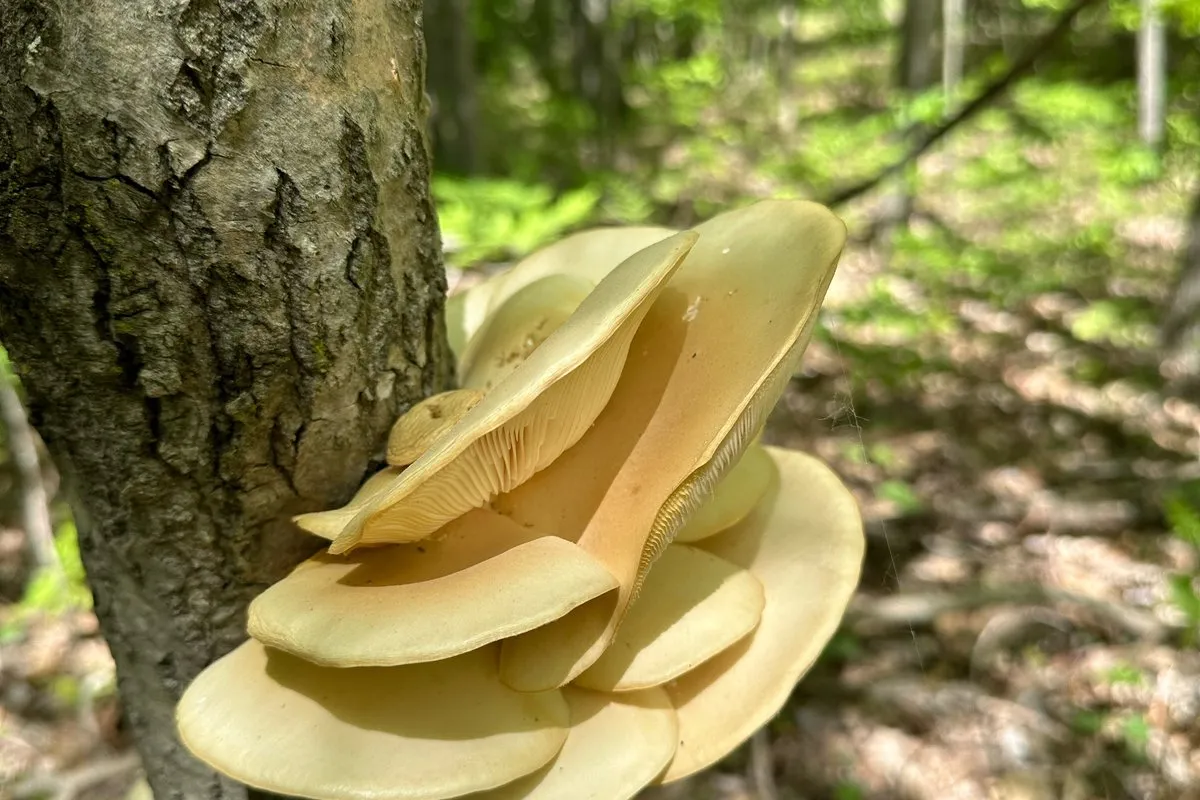
Photo note
Pleurotus on a Michigan trunk.
Photo: Fungi, Flora & Ferment
What Are Oyster Mushrooms?
“Oyster mushroom” usually means a Pleurotus species. A well-known one is the Pleurotus ostreatus complex. Related oysters also fruit on wood. Caps are often shaped like an oyster shell or a fan. They range from pale gray to beige or brownish, depending on species, age and weather. The gills are true gills. They run down (decurrent) a stubby stem that sits to the side or off-center. Many grow in layered clusters on dead or dying hardwoods.
Store-bought oysters are usually Pleurotus grown on sterile material. Finding wild ones is a different skill. Don’t assume a wild cluster is safe because it “looks like the store package.”
Habitat in Michigan
Look for Pleurotus on wood. Check hardwood logs, stumps and damaged trunks in oak–maple country and mixed stands of the northern Lower Peninsula. They often fruit in cooler, wetter spells from fall through the spring thaw. They can also pop up off-season when moisture returns. Some grow on conifers, and the species differ. Learn your local host trees with mentors and keys.
Habitat notes:
Take a photo of the wood when you can (bark, nearby leaves, hardwood or softwood clues).
Note how they cluster and how the caps attach.
Skip spots that may be dirty: sprayed wood edges, industrial debris and heavy roadside exhaust.
Never make up GPS points for private patches. Our foraging ethics guide covers how to share finds.
Identification Checklist
Cap
Often fan-, oyster- or shelf-shaped
Pale cream or gray to brownish. Weather can spot or fade the caps.
Smooth to slightly textured. Edges may roll under when young.
Gills
True gills (not pores)
Often white to cream
Usually decurrent, running down the stem
Stem
Short and to the side or off-center, more often than a tall center stalk
Some look almost stemless when tightly stacked.
Spore print (a helper for later)
Many edible Pleurotus give a pale lilac-gray to whitish print, depending on species. Check your regional guides. Don’t just memorize one color from the internet.
How it grows
On wood, often in overlapping clusters
Fairly soft flesh when young. Tougher with age.
Positive ID means you’re sure of the genus, and of the species when your skill allows. You’ve also ruled out the look-alikes. Only then do you cook.
Look-Alikes and Caution
Many pale gilled mushrooms grow on wood. Watch for these:
Other pale polypores and gilled wood mushrooms can look like a “shelf” from above. Always check for gills or pores.
Some Crepidotus and other small gilled wood mushrooms fool true beginners. Size, gill attachment and flesh differ. Study them with keys.
Angel wings and other white wood mushrooms come up in some regional look-alike lists. Learn what your mentors stress for Michigan.
Never taste-test your way through pale clusters on wood.
If it isn’t clearly Pleurotus to your trained eye, leave it. Bring photos of the top, gills, stem and host wood to a skilled identifier.
Harvest and Kitchen Quality
Take young, clean clusters you’ll use soon.
Check for bitterness from age, too much water and insect tunnels.
Cut cleanly from the wood. Leave the mycelium in the log.
Store them cool and cook them soon. Or dry them fully, only after a positive ID.
Cooking Notes (After Positive ID)
Confirmed oyster mushrooms (Pleurotus) are excellent when cooked thoroughly:
Tear them into strips. Sauté on high heat to brown the edges.
Lovely in stir-fries, soups, dumpling fillings and noodle bowls.
Dry clean extras. Label them Pleurotus / oyster mushroom, with the date.
Cook thoroughly. Don’t follow raw “ceviche” trends with wild mushrooms.
The easiest wild mushroom to start with
Our dried wild oyster mushrooms (Pleurotus) are mild and tender, and they are ready to cook after about 15 minutes in warm water. A 1 oz bag costs $12.99, and a 4 oz bag costs $45.99.
We ship within Michigan, and mushroom orders of $50 or more ship free in Michigan. Pickup in Clare County is always free.
Drying Basics
Positive ID only. Clean off debris.
Tear or slice evenly.
Dry until brittle all the way through.
Store airtight, cool and dark.
When you need them, soak them in warm liquid, squeeze gently and brown them in the pan.
Weather and Timing
Oyster mushrooms often come up after cool rains. Freeze–thaw swings in late fall and early spring can wake up logs that looked quiet the week before. Keep notes on temperature swings and which hardwoods fruited. Go back to the same log, with permission, over a season. You’ll learn more than from one trophy photo.
Cleaning and Storage
Brush off bark crumbs outdoors, before they reach the sink.
Avoid long soaks that waterlog the gills. A quick rinse is enough when there’s only a little grit.
Keep them in the fridge in a container that breathes. Cook within a few days, or dry them soon after a positive ID.
Label dried jars with the common name, Pleurotus, the date and the host wood, for your records.
Keep Learning
Oyster mushrooms (Pleurotus) take some care. Know the host wood, check that the gills run down the stem and stay humble about pale look-alikes. Our dried oyster mushrooms ship within Michigan. More guides are on Learn.
Key takeaway: Soft fan caps on hardwood, true gills that run down the stem, growing in clusters. Get a positive ID before the skillet.
