
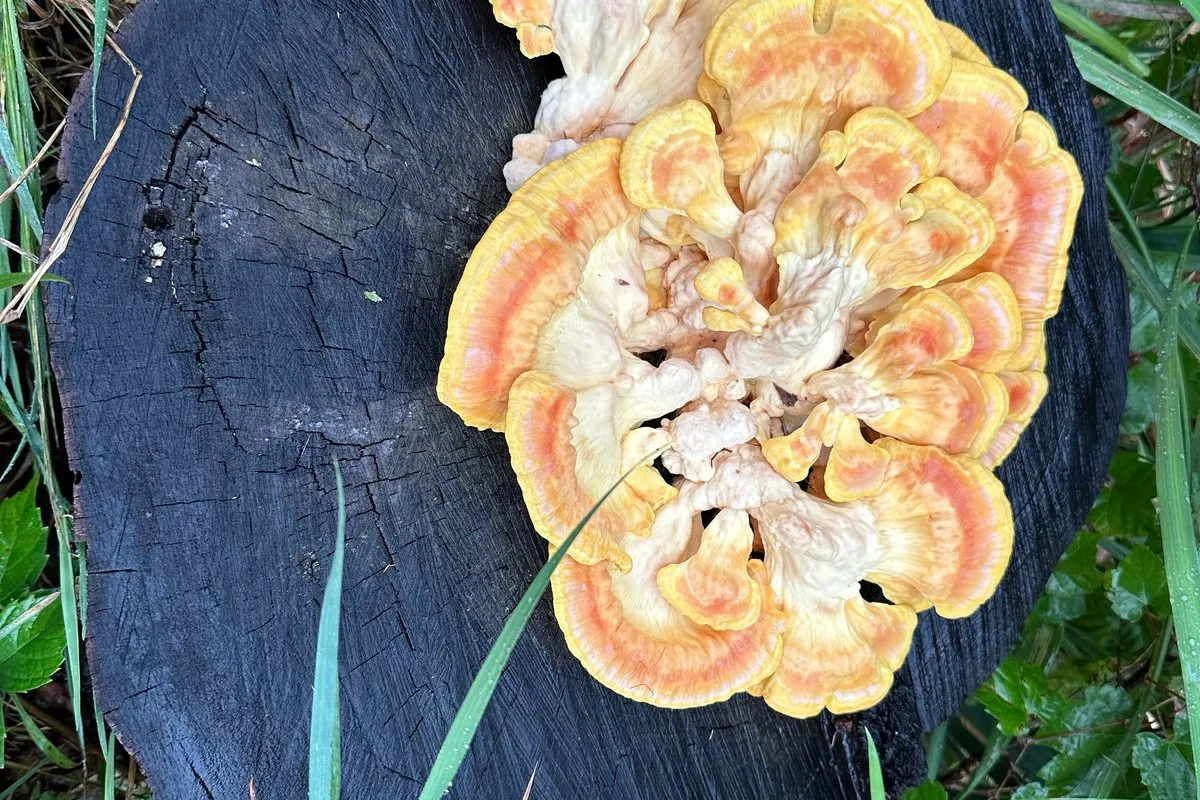
Chicken of the Woods (Laetiporus) Guide: ID, Habitat & Cooking Dried
Chicken of the woods—Laetiporus species—is one of the most talked-about wild mushrooms in Michigan’s late-summer and early-fall woods. Across Michigan, foragers often spot bright orange shelves on hardwoods and ask the same questions: Is this really chicken of the woods? What else looks like it? And once you’ve dried a harvest (or bought dried shelves), how do you cook them?
Before you cook any, check the underside. Chicken of the woods has pores, not gills. If you’re not sure, ask an experienced forager.
What Is Chicken of the Woods?
“Chicken of the woods” commonly refers to members of the genus Laetiporus—polypore mushrooms that grow in overlapping shelves (brackets) on wood.
Fresh specimens are often vivid orange to yellow on the upper surface, with a softer, sulfur-yellow pore surface underneath. The texture of young, tender growth is why cooks compare it to chicken in the pan—but that nickname is about cooking texture, not biology or nutrition marketing.
In the Great Lakes region, people most often discuss Laetiporus sulphureus and related Laetiporus taxa associated with hardwoods. Taxonomy and host preferences can be nuanced; local field experience and careful ID matter more than memorizing one Latin name from a photo.
Where It Grows in Michigan
In Michigan woodlots, chicken of the woods is typically associated with hardwoods—oaks and other deciduous trees are frequent conversation points among local foragers. You may find shelves on standing dead wood, fallen logs, or living trees (depending on species and stage). Timing often leans toward warmer months into early fall, but fruiting depends on weather, wood moisture, and the particular stand.
Habitat notes for learners:
Look at wood type (hardwood vs. conifer) as part of your ID checklist—not as a shortcut by itself.
Note whether growth is on living, declining, or dead wood.
Photograph the pore surface, overall color, and attachment to the wood.
Never assume a bright orange shelf is edible based on color alone.
Identification Checklist
Use multiple features together. A single “looks right” photo is not enough.
Cap / upper surface
Often bright orange, peach, or yellow-orange when young
May fade or bleach with age and sun
Shelving, overlapping brackets are common
Underside (pores)
Laetiporus is a polypore: the underside has pores, not true gills
Pore surface frequently yellow when fresh
Age changes color and texture—older shelves can become tough and chalky
Flesh and smell
Young growth is softer; older growth becomes woody and less useful in the kitchen
Learn what a normal specimen smells like in the field with an experienced mentor
Growth habit
Growing from wood (not from soil as a free-standing “mushroom stem” in the classic agaric sense)
Often in clusters of shelves
Positive-identification reminder: If you cannot positively identify the mushroom—genus, key traits, and that it is not a lookalike of concern—do not cook it, do not dry it for food, and do not serve it to others.
Lookalikes and Caution
Colorful shelf fungi invite mistakes. Watch for these:
Other orange or yellowish polypores can appear on wood. Pore structure, host tree, and flesh texture help separate groups—but only with practice.
Jack-o’-lantern mushrooms (Omphalotus) are gilled mushrooms (true gills, not pores) and grow in clusters at wood bases or buried wood. They are a classic “orange cluster” confusion for beginners who skip underside checks. Omphalotus is not chicken of the woods.
Some people report digestive upset from Laetiporus even when ID is correct—especially older specimens, certain hosts, or individual sensitivity. Culinary tradition does not equal “safe for everyone.” Start carefully only after positive ID, and when in doubt, leave it.
If you are new to foraging, learn with a mentor, join reputable local groups, and use multiple field guides. Photos on social media are not identification.
Harvest Ethics Snapshot
Take only what you will use.
Leave plenty for wildlife and for the fungus to continue its cycle.
Respect private property—always get permission.
Avoid contaminated sites (roadsides with heavy runoff, sprayed areas, industrial edges).
For a fuller local ethics overview, see our guide on foraging ethics in Michigan.
Drying Chicken of the Woods
Many Michigan foragers dry young, clean shelves for later cooking. Drying concentrates flavor and extends storage when done cleanly and thoroughly.
High-level drying notes:
Start with positively identified, clean, young material.
Slice into even pieces so moisture leaves consistently.
Dry until pieces are cracker-dry (no cool/damp centers).
Store airtight, cool, and dark; label with species, date, and location notes for your own records.
At Fungi, Flora & Ferment, we dry only young, clean shelves we’ve identified ourselves.
Cooking Dried Chicken of the Woods
Dried Laetiporus needs rehydration before most recipes. (See our separate guide: how to rehydrate dried wild mushrooms.)
Basic kitchen approach
Rehydrate in warm water or light stock until pliable.
Reserve the soaking liquid if it smells clean and pleasant—strain and use as broth base for soups or gravies.
Pat dry and cook thoroughly. Many cooks sauté with onion, garlic, and herbs, or simmer into stews where the meaty texture shines.
Prefer younger dried pieces; very old, woody shelves stay tough even after soaking.
Flavor pairing ideas
Creamy soups and skillet “chicken-style” sautés
Pasta sauces and grain bowls
Savory pies and hand pies with Midwestern herbs
Season boldly; dried wild mushrooms love acid (a splash of vinegar or lemon at the end), fat, and salt.
Cook it tonight, with no hunting needed
Our dried wild chicken of the woods (Laetiporus) is picked by an MDARD-certified forager in Clare County. A 1 oz bag is $15.99, and a 4 oz bag is $55.99 and ships free in Michigan.
We ship within Michigan, and mushroom orders of $50 or more ship free in Michigan. Pickup in Clare County is always free.
Shop dried chicken of the woods
Before You Cook
Know what it is before you cook it, every time.
Cook it thoroughly.
If anyone in your household has mushroom allergies or sensitivities, proceed with extra caution even with familiar species.
Keep Learning
Whether you are comparing orange shelves in a woodlot or planning dinner with dried chicken of the woods, slow down and identify carefully. Our dried chicken of the woods ships within Michigan. More guides are on Learn.
Key takeaway: Chicken of the woods (Laetiporus) rewards careful eyes and patient cooks. Pore surface, wood host, age, and lookalike awareness matter more than a bright color in a phone photo.
Ready to cook it?
Try our skillet chicken of the woods with butter and lemon, which takes about 25 minutes after soaking.
