White Pine Needle (Pinus strobus) Tincture Basics
Eastern white pine, Pinus strobus, is a common conifer in Michigan’s north woods. It also grows in mixed stands across the northern Lower Peninsula. Needles from a correctly identified white pine are sometimes made into a small-batch herbal tincture. That means plant material soaked in alcohol, or another labeled solvent, to make a strong liquid extract. People use it for aroma, tradition or craft.
This article explains what a pine needle tincture is. It shows how to recognize Eastern white pine (Pinus strobus) and how a simple tincture is made.
What Is a Tincture? (Plain Language)
In herbal craft, a tincture is usually:
Chopped or bruised plant material
Covered with a solvent. This is most often ethanol (drinking-strength spirits). Some makers use other food-grade solvents, depending on their process.
Left to soak for a while
Strained and bottled, often with a dropper
People use herbal tinctures for many personal reasons: flavor, aroma, family tradition or a general interest in herbs.
Tree ID: Eastern White Pine (Pinus strobus)
Before any plant craft, identify the tree. It’s easy to mix up conifers in winter yards and piles of cut branches.
Needles in bundles (fascicles)
Pinus strobus needles usually grow in bundles of five.
The needles are soft, slender and blue-green. They’re often 2–5 inches long, depending on growing conditions.
They feel softer than many other pines. That’s a classic field clue, but still count the needles in a bundle.
How the tree grows
Eastern white pine is a tall conifer. A healthy one has a soft-looking plume of needles.
The bark and overall shape change with age, so use more than one trait.
Yards and woodlots often have white pine next to other evergreens. Don’t assume every soft, piney branch is Pinus strobus.
What not to confuse it with
Other pines with 2- or 3-needle bundles are different species.
Yews (Taxus) are not pines and can be highly toxic. They’re common in landscaping. Never make “pine needle” preparations from evergreens or yard clippings you can’t name.
Spruces and firs have single needles that attach differently, not in pine bundles.
If you can’t positively identify Pinus strobus, don’t pick it for tea, tincture or any kitchen or herbal project.
Picking Needles
Good plant-picking habits include:
Getting permission on private land, and following posted and public land rules
Taking modest amounts of needles from strong, healthy trees. Don’t strip young trees.
Choosing clean spots away from roadside exhaust and spray drift
Picking fresh, healthy needles. Skip moldy or chemically treated material.
Knowing whether the tree was sprayed recently (yards, orchards, utility corridors)
Same as with mushrooms: take only what you’ll use and leave the tree healthy.
What’s in a Bottle
A small-batch white pine needle (Pinus strobus) tincture is:
A handmade herbal extract that starts with knowing the plant
Labeled with the plant, the alcohol and how it was made
Something to check for alcohol content, ingredients and whether it suits you
Read labels carefully. Talk with the right professional if you avoid alcohol, are pregnant or nursing, are giving it to children or have a medical condition.
How a Tincture Is Made (The Basics)
The basic steps:
Confirm it’s Pinus strobus.
Use clean needles. Chop or bruise them so more surface is exposed.
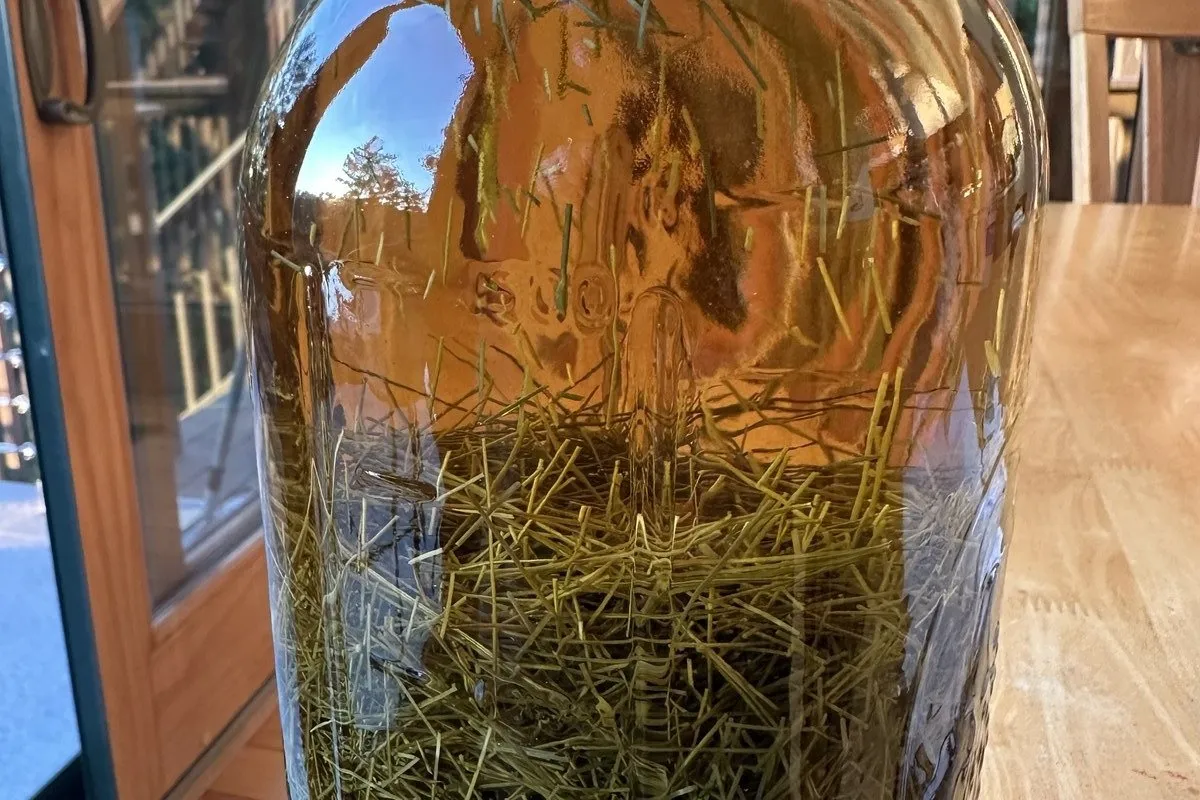
Cover them with the solvent you chose, in a clean jar.
Let it soak for as long as your method calls for, away from strong heat. Shake it now and then if that’s part of your method.
Strain it and bottle it in amber glass. Label it with the plant name (common and scientific), the solvent, the date and batch notes.
Shelf life and storage depend on the method and the alcohol strength. Follow the maker’s label.
Common Questions
Is it for cooking?
Some people use tiny amounts for aroma or craft. Others keep tinctures strictly as herbal extracts. Follow the product label. Don’t make up food uses that clash with the alcohol strength or ingredients.
Can I make this from any evergreen?
No. A positive ID of Pinus strobus matters. Look-alikes in yards can be dangerous.
Keep Learning with Fungi, Flora & Ferment
White pine needle (Pinus strobus) tincture starts with the tree in front of you. Identify it carefully, make it cleanly and label it honestly. More guides are on Learn.
Key takeaway: Count five needles per bundle, be sure it’s Pinus strobus, and label your jar clearly.
