Turkey Tail (Trametes versicolor) in Michigan
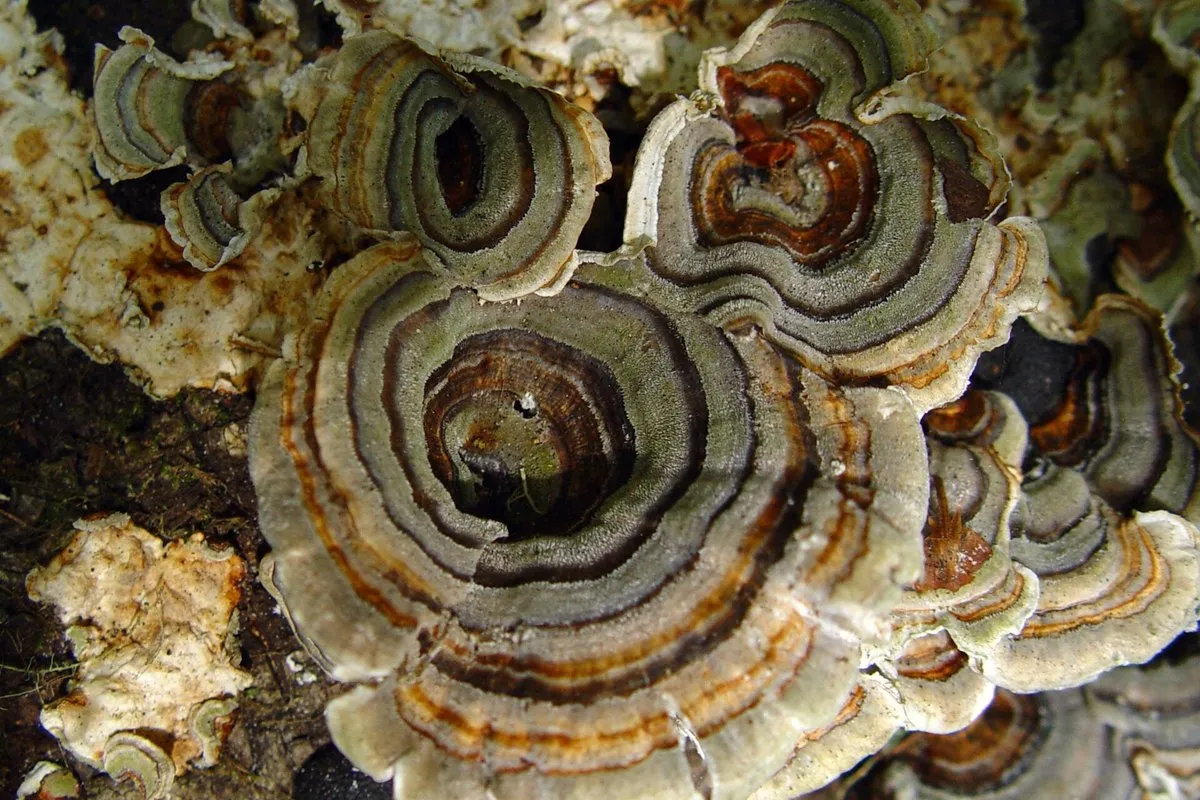
Turkey tail—Trametes versicolor—is one of the most recognizable thin polypores on hardwood logs across Michigan. In Clare County and the oak–maple–pine woods of the northern Lower Peninsula, overlapping fan-shaped brackets show concentric color zones that remind people of a turkey’s tail feathers. It’s a great mushroom for learning to read pores, color bands and look-alikes.
Turkey tail isn’t one to cook. It’s tough and leathery. This guide is about learning to recognize it.
Why Learn Turkey Tail If It Is Not a Dinner Mushroom?
Beginners meet turkey tail constantly. Learning to name Trametes versicolor and separate lookalikes builds skills you can use on every walk:
• Read pore surfaces instead of assuming gills.
• Notice zonate caps.
• Check thickness, flexibility, and flesh color.
The palette varies, which is why versicolor fits. The underside is a pale pore surface, cream to whitish when fresh, not gills. Turkey tail is a wood decomposer found year-round in many Michigan woodlots because the brackets persist. Persistence does not equal culinary tenderness.
Habitat Notes
Expect turkey tail on hardwood logs, stumps, and fallen branches in mixed woods; oak–maple stands and successional edges; and woody debris piles. Fruiting and visible brackets appear across seasons, so winter walks can still teach ID. Skip chemically suspicious sites when collecting specimens for study displays, and always get permission on private land. See the foraging ethics guide.
Careful ID Checklist
Upper surface
• Thin, flexible brackets often form overlapping clusters.
• Concentric color zones have a highly variable palette.
• Fresh specimens may have finely hairy or velvety zones; texture helps distinguish some lookalikes.
Underside
• Pores, not true gills, identify the polypore structure.
• Pores are typically small and the surface is pale when fresh.
• Turn older specimens over; pore color and bruising habits belong in your notes.
Flesh and thickness
• Relatively thin and leathery compared with thick conk polypores.
• Flexibility when fresh is a useful contrast against brittle lookalikes.
Growth
• On wood, often in layered shelves along logs.
Positive ID means you can defend Trametes versicolor, or explain your careful determination, against common lookalikes.
Lookalikes Beginners Confuse
False turkey tail and Stereum-type fungi may have smooth or differently textured undersides, not a true pore surface like Trametes. Other Trametes or lookalike polypores can differ in pore size, zonation, hairiness, and flesh, so use regional keys. Thick, corky conks and painted-looking shelves may share colors without matching thin turkey-tail architecture.
Underside first. Color bands alone are not enough.
Field Study Habits
Photograph the top, underside, and wood host. Note flexibility and thickness. Compare with a mentor’s confirmed specimens. Leave most brackets on the log and take modest study samples only with permission. Never strip a log bare for craft clutter you will not use.
What Is Turkey Tail?
Trametes versicolor is a thin, leathery polypore that forms clustered brackets on dead hardwood and sometimes other woody substrates. The upper surface typically shows concentric zones of white, cream, brown, rust, blue-gray, or blackish bands.
Cover photo: Franco Folini from San Francisco, USA / Wikimedia Commons (CC BY-SA 2.0), cropped
